The short answer
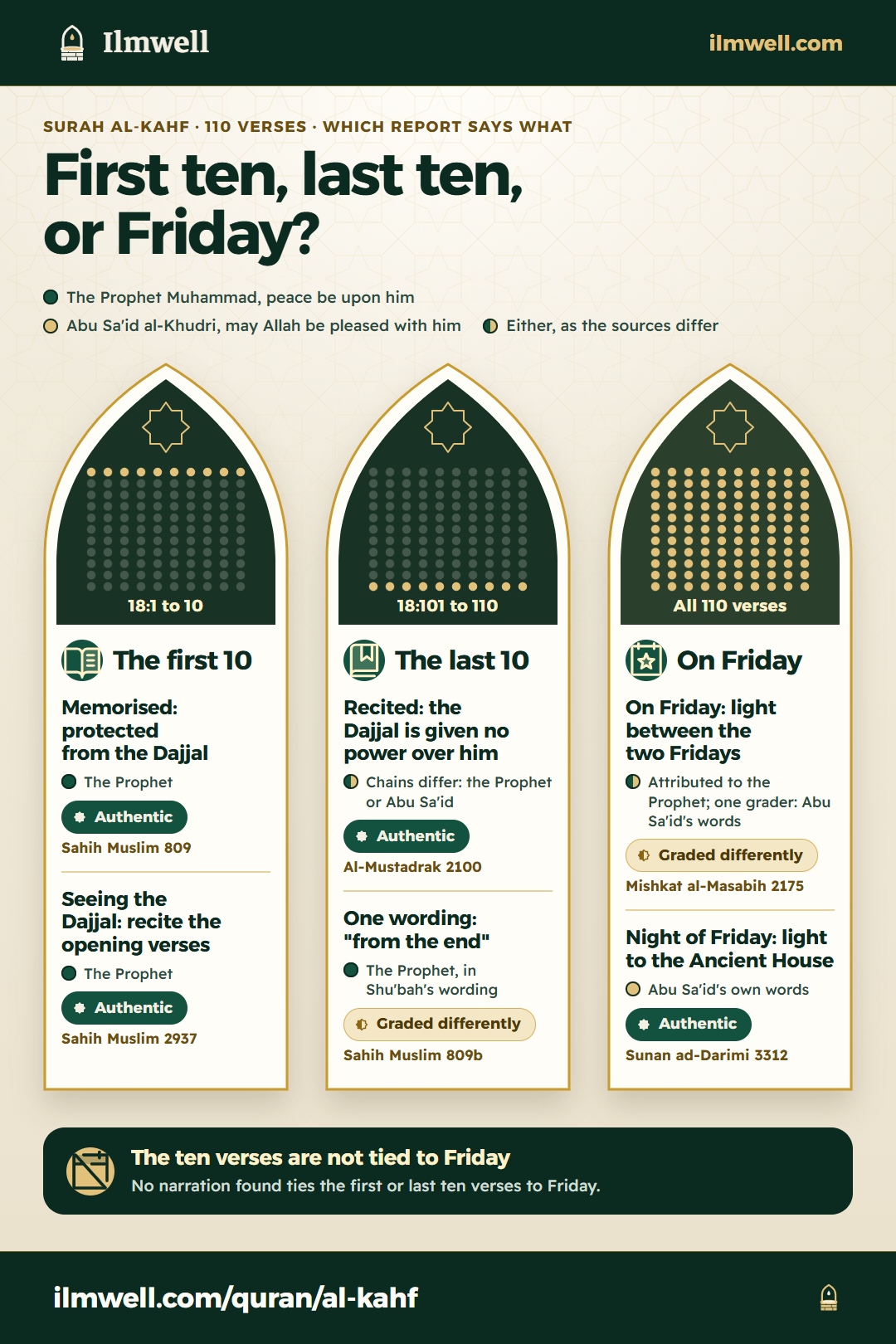
Surah Kahf (Al-Kahf, "the Cave") is surah 18 of the Quran: 110 verses, listed as Makkan, that tell four accounts. The Prophet Muhammad, peace be upon him, said whoever memorises its first ten verses is protected from the Dajjal, the false messiah of the end of time (Sahih Muslim 809, graded sahih).
How long is Surah Kahf, and which para is it in?
It has 110 verses (ayat) across 12 pages, and runs over two juz (para), by the Tanzil text and page data.
| Fact | Surah Al-Kahf |
|---|---|
| Surah number | 18 of 114 |
| Verses (ayat) | 110 |
| Words | 1,579, as the Tanzil Arabic text spaces them |
| Pages | 12: pages 293 to 304 of the 604-page layout, starting part-way down page 293 |
| Juz (para) | Juz 15: verses 1 to 74; juz 16: verses 75 to 110 |
| First 10 verses | 18:1 to 10 (surah 18, verses 1 to 10) |
| Last 10 verses | 18:101 to 110 |
| Makkan or Madinan | Makkan, in the Tanzil listing (from before the move to Madinah) |
| Name | Al-Kahf (الكهف) means the Cave, from verses 9 and 10 |
What is Surah Al-Kahf about?
Four accounts, with reminders about this world and the next between them. The eight passages below are our division by subject; the text does not mark them. Four are the accounts: the people of the cave; the man of the two gardens; Musa (Moses), peace be upon him, and al-Khidr, peace be upon him; and Dhul-Qarnayn. Detailed meaning belongs to tafsir (Quran commentary).
| Verses | Passage | What the verses say |
|---|---|---|
| 1 to 8 | The Scripture and the warning | "Praise be to Allah Who has revealed the Scripture to His slave" (18:1), and a warning to those who say "Allah has chosen a son" (18:4). |
| 9 to 26 | The people of the caveAccount | Young men take refuge in the cave and pray for mercy (18:10), sleep for years and wake. "Allah is Best Aware how long they tarried" (18:26). |
| 27 to 31 | Recite, and keep good company | "recite that which has been revealed to you" (18:27); stay with "those who cry to their Lord morning and evening" (18:28). |
| 32 to 44 | The man of the two gardensAccount | The owner of "two gardens of grapes" doubts the Hour (18:36); his companion says he should have said "That which Allah wills" (18:39). His fruit is destroyed (18:42). |
| 45 to 59 | This world, Iblis and the Day | The life of the world is like plants that become "dry twigs that the winds scatter" (18:45); Iblis refuses to prostrate (18:50). |
| 60 to 82 | Musa (Moses) and al-KhidrAccount | Musa seeks "the point where the two seas meet" (18:60) and follows "one of Our slaves" (18:65): a ship holed, a lad slain, a wall repaired, then their meaning (18:71 to 82). |
| 83 to 98 | Dhul-QarnaynAccount | "We made him strong in the land" (18:84). He reaches the setting-place and the rising-place of the sun, then builds a barrier against Gog and Magog (18:86 to 97). |
| 99 to 110 | The Trumpet and the closing verses | The Trumpet (18:99); the sea as ink for the Words of my Lord (18:109); "I am only a mortal like you" (18:110). |
The Quran calls the man Musa followed "one of Our slaves" (18:65). His name comes from a hadith in which the Prophet, through Ubayy ibn Ka'b, may Allah be pleased with him, tells the story and names him al-Khidr. It names Musa's young servant too: Yusha' ibn Nun, peace be upon him. It also says why Musa set out. Asked who was the most learned of people, he said "I", and Allah told him of a servant at the junction of the two seas more learned than him (Sahih al-Bukhari 122, graded sahih). The verses do not say who Dhul-Qarnayn was or when he lived.
1AuthenticSahih al-Bukhari 122
Surah Kahf in Arabic: the full text
Skip the scroll: verse by verse, with English, the first 10 verses, the last 10 verses or reading it on Friday.
Al-Kahf 18:1 to 110
ٱلْحَمْدُ لِلَّهِ ٱلَّذِىٓ أَنزَلَ عَلَىٰ عَبْدِهِ ٱلْكِتَـٰبَ وَلَمْ يَجْعَل لَّهُۥ عِوَجَا ۜ ١ قَيِّمًا لِّيُنذِرَ بَأْسًا شَدِيدًا مِّن لَّدُنْهُ وَيُبَشِّرَ ٱلْمُؤْمِنِينَ ٱلَّذِينَ يَعْمَلُونَ ٱلصَّـٰلِحَـٰتِ أَنَّ لَهُمْ أَجْرًا حَسَنًا ٢ مَّـٰكِثِينَ فِيهِ أَبَدًا ٣ وَيُنذِرَ ٱلَّذِينَ قَالُوا۟ ٱتَّخَذَ ٱللَّهُ وَلَدًا ٤ مَّا لَهُم بِهِۦ مِنْ عِلْمٍ وَلَا لِـَٔابَآئِهِمْ ۚ كَبُرَتْ كَلِمَةً تَخْرُجُ مِنْ أَفْوَٰهِهِمْ ۚ إِن يَقُولُونَ إِلَّا كَذِبًا ٥ فَلَعَلَّكَ بَـٰخِعٌ نَّفْسَكَ عَلَىٰٓ ءَاثَـٰرِهِمْ إِن لَّمْ يُؤْمِنُوا۟ بِهَـٰذَا ٱلْحَدِيثِ أَسَفًا ٦ إِنَّا جَعَلْنَا مَا عَلَى ٱلْأَرْضِ زِينَةً لَّهَا لِنَبْلُوَهُمْ أَيُّهُمْ أَحْسَنُ عَمَلًا ٧ وَإِنَّا لَجَـٰعِلُونَ مَا عَلَيْهَا صَعِيدًا جُرُزًا ٨ أَمْ حَسِبْتَ أَنَّ أَصْحَـٰبَ ٱلْكَهْفِ وَٱلرَّقِيمِ كَانُوا۟ مِنْ ءَايَـٰتِنَا عَجَبًا ٩ إِذْ أَوَى ٱلْفِتْيَةُ إِلَى ٱلْكَهْفِ فَقَالُوا۟ رَبَّنَآ ءَاتِنَا مِن لَّدُنكَ رَحْمَةً وَهَيِّئْ لَنَا مِنْ أَمْرِنَا رَشَدًا ١٠ فَضَرَبْنَا عَلَىٰٓ ءَاذَانِهِمْ فِى ٱلْكَهْفِ سِنِينَ عَدَدًا ١١ ثُمَّ بَعَثْنَـٰهُمْ لِنَعْلَمَ أَىُّ ٱلْحِزْبَيْنِ أَحْصَىٰ لِمَا لَبِثُوٓا۟ أَمَدًا ١٢ نَّحْنُ نَقُصُّ عَلَيْكَ نَبَأَهُم بِٱلْحَقِّ ۚ إِنَّهُمْ فِتْيَةٌ ءَامَنُوا۟ بِرَبِّهِمْ وَزِدْنَـٰهُمْ هُدًى ١٣ وَرَبَطْنَا عَلَىٰ قُلُوبِهِمْ إِذْ قَامُوا۟ فَقَالُوا۟ رَبُّنَا رَبُّ ٱلسَّمَـٰوَٰتِ وَٱلْأَرْضِ لَن نَّدْعُوَا۟ مِن دُونِهِۦٓ إِلَـٰهًا ۖ لَّقَدْ قُلْنَآ إِذًا شَطَطًا ١٤ هَـٰٓؤُلَآءِ قَوْمُنَا ٱتَّخَذُوا۟ مِن دُونِهِۦٓ ءَالِهَةً ۖ لَّوْلَا يَأْتُونَ عَلَيْهِم بِسُلْطَـٰنٍۭ بَيِّنٍ ۖ فَمَنْ أَظْلَمُ مِمَّنِ ٱفْتَرَىٰ عَلَى ٱللَّهِ كَذِبًا ١٥ وَإِذِ ٱعْتَزَلْتُمُوهُمْ وَمَا يَعْبُدُونَ إِلَّا ٱللَّهَ فَأْوُۥٓا۟ إِلَى ٱلْكَهْفِ يَنشُرْ لَكُمْ رَبُّكُم مِّن رَّحْمَتِهِۦ وَيُهَيِّئْ لَكُم مِّنْ أَمْرِكُم مِّرْفَقًا ١٦ ۞ وَتَرَى ٱلشَّمْسَ إِذَا طَلَعَت تَّزَٰوَرُ عَن كَهْفِهِمْ ذَاتَ ٱلْيَمِينِ وَإِذَا غَرَبَت تَّقْرِضُهُمْ ذَاتَ ٱلشِّمَالِ وَهُمْ فِى فَجْوَةٍ مِّنْهُ ۚ ذَٰلِكَ مِنْ ءَايَـٰتِ ٱللَّهِ ۗ مَن يَهْدِ ٱللَّهُ فَهُوَ ٱلْمُهْتَدِ ۖ وَمَن يُضْلِلْ فَلَن تَجِدَ لَهُۥ وَلِيًّا مُّرْشِدًا ١٧ وَتَحْسَبُهُمْ أَيْقَاظًا وَهُمْ رُقُودٌ ۚ وَنُقَلِّبُهُمْ ذَاتَ ٱلْيَمِينِ وَذَاتَ ٱلشِّمَالِ ۖ وَكَلْبُهُم بَـٰسِطٌ ذِرَاعَيْهِ بِٱلْوَصِيدِ ۚ لَوِ ٱطَّلَعْتَ عَلَيْهِمْ لَوَلَّيْتَ مِنْهُمْ فِرَارًا وَلَمُلِئْتَ مِنْهُمْ رُعْبًا ١٨ وَكَذَٰلِكَ بَعَثْنَـٰهُمْ لِيَتَسَآءَلُوا۟ بَيْنَهُمْ ۚ قَالَ قَآئِلٌ مِّنْهُمْ كَمْ لَبِثْتُمْ ۖ قَالُوا۟ لَبِثْنَا يَوْمًا أَوْ بَعْضَ يَوْمٍ ۚ قَالُوا۟ رَبُّكُمْ أَعْلَمُ بِمَا لَبِثْتُمْ فَٱبْعَثُوٓا۟ أَحَدَكُم بِوَرِقِكُمْ هَـٰذِهِۦٓ إِلَى ٱلْمَدِينَةِ فَلْيَنظُرْ أَيُّهَآ أَزْكَىٰ طَعَامًا فَلْيَأْتِكُم بِرِزْقٍ مِّنْهُ وَلْيَتَلَطَّفْ وَلَا يُشْعِرَنَّ بِكُمْ أَحَدًا ١٩ إِنَّهُمْ إِن يَظْهَرُوا۟ عَلَيْكُمْ يَرْجُمُوكُمْ أَوْ يُعِيدُوكُمْ فِى مِلَّتِهِمْ وَلَن تُفْلِحُوٓا۟ إِذًا أَبَدًا ٢٠ وَكَذَٰلِكَ أَعْثَرْنَا عَلَيْهِمْ لِيَعْلَمُوٓا۟ أَنَّ وَعْدَ ٱللَّهِ حَقٌّ وَأَنَّ ٱلسَّاعَةَ لَا رَيْبَ فِيهَآ إِذْ يَتَنَـٰزَعُونَ بَيْنَهُمْ أَمْرَهُمْ ۖ فَقَالُوا۟ ٱبْنُوا۟ عَلَيْهِم بُنْيَـٰنًا ۖ رَّبُّهُمْ أَعْلَمُ بِهِمْ ۚ قَالَ ٱلَّذِينَ غَلَبُوا۟ عَلَىٰٓ أَمْرِهِمْ لَنَتَّخِذَنَّ عَلَيْهِم مَّسْجِدًا ٢١ سَيَقُولُونَ ثَلَـٰثَةٌ رَّابِعُهُمْ كَلْبُهُمْ وَيَقُولُونَ خَمْسَةٌ سَادِسُهُمْ كَلْبُهُمْ رَجْمًۢا بِٱلْغَيْبِ ۖ وَيَقُولُونَ سَبْعَةٌ وَثَامِنُهُمْ كَلْبُهُمْ ۚ قُل رَّبِّىٓ أَعْلَمُ بِعِدَّتِهِم مَّا يَعْلَمُهُمْ إِلَّا قَلِيلٌ ۗ فَلَا تُمَارِ فِيهِمْ إِلَّا مِرَآءً ظَـٰهِرًا وَلَا تَسْتَفْتِ فِيهِم مِّنْهُمْ أَحَدًا ٢٢ وَلَا تَقُولَنَّ لِشَا۟ىْءٍ إِنِّى فَاعِلٌ ذَٰلِكَ غَدًا ٢٣ إِلَّآ أَن يَشَآءَ ٱللَّهُ ۚ وَٱذْكُر رَّبَّكَ إِذَا نَسِيتَ وَقُلْ عَسَىٰٓ أَن يَهْدِيَنِ رَبِّى لِأَقْرَبَ مِنْ هَـٰذَا رَشَدًا ٢٤ وَلَبِثُوا۟ فِى كَهْفِهِمْ ثَلَـٰثَ مِا۟ئَةٍ سِنِينَ وَٱزْدَادُوا۟ تِسْعًا ٢٥ قُلِ ٱللَّهُ أَعْلَمُ بِمَا لَبِثُوا۟ ۖ لَهُۥ غَيْبُ ٱلسَّمَـٰوَٰتِ وَٱلْأَرْضِ ۖ أَبْصِرْ بِهِۦ وَأَسْمِعْ ۚ مَا لَهُم مِّن دُونِهِۦ مِن وَلِىٍّ وَلَا يُشْرِكُ فِى حُكْمِهِۦٓ أَحَدًا ٢٦ وَٱتْلُ مَآ أُوحِىَ إِلَيْكَ مِن كِتَابِ رَبِّكَ ۖ لَا مُبَدِّلَ لِكَلِمَـٰتِهِۦ وَلَن تَجِدَ مِن دُونِهِۦ مُلْتَحَدًا ٢٧ وَٱصْبِرْ نَفْسَكَ مَعَ ٱلَّذِينَ يَدْعُونَ رَبَّهُم بِٱلْغَدَوٰةِ وَٱلْعَشِىِّ يُرِيدُونَ وَجْهَهُۥ ۖ وَلَا تَعْدُ عَيْنَاكَ عَنْهُمْ تُرِيدُ زِينَةَ ٱلْحَيَوٰةِ ٱلدُّنْيَا ۖ وَلَا تُطِعْ مَنْ أَغْفَلْنَا قَلْبَهُۥ عَن ذِكْرِنَا وَٱتَّبَعَ هَوَىٰهُ وَكَانَ أَمْرُهُۥ فُرُطًا ٢٨ وَقُلِ ٱلْحَقُّ مِن رَّبِّكُمْ ۖ فَمَن شَآءَ فَلْيُؤْمِن وَمَن شَآءَ فَلْيَكْفُرْ ۚ إِنَّآ أَعْتَدْنَا لِلظَّـٰلِمِينَ نَارًا أَحَاطَ بِهِمْ سُرَادِقُهَا ۚ وَإِن يَسْتَغِيثُوا۟ يُغَاثُوا۟ بِمَآءٍ كَٱلْمُهْلِ يَشْوِى ٱلْوُجُوهَ ۚ بِئْسَ ٱلشَّرَابُ وَسَآءَتْ مُرْتَفَقًا ٢٩ إِنَّ ٱلَّذِينَ ءَامَنُوا۟ وَعَمِلُوا۟ ٱلصَّـٰلِحَـٰتِ إِنَّا لَا نُضِيعُ أَجْرَ مَنْ أَحْسَنَ عَمَلًا ٣٠ أُو۟لَـٰٓئِكَ لَهُمْ جَنَّـٰتُ عَدْنٍ تَجْرِى مِن تَحْتِهِمُ ٱلْأَنْهَـٰرُ يُحَلَّوْنَ فِيهَا مِنْ أَسَاوِرَ مِن ذَهَبٍ وَيَلْبَسُونَ ثِيَابًا خُضْرًا مِّن سُندُسٍ وَإِسْتَبْرَقٍ مُّتَّكِـِٔينَ فِيهَا عَلَى ٱلْأَرَآئِكِ ۚ نِعْمَ ٱلثَّوَابُ وَحَسُنَتْ مُرْتَفَقًا ٣١ ۞ وَٱضْرِبْ لَهُم مَّثَلًا رَّجُلَيْنِ جَعَلْنَا لِأَحَدِهِمَا جَنَّتَيْنِ مِنْ أَعْنَـٰبٍ وَحَفَفْنَـٰهُمَا بِنَخْلٍ وَجَعَلْنَا بَيْنَهُمَا زَرْعًا ٣٢ كِلْتَا ٱلْجَنَّتَيْنِ ءَاتَتْ أُكُلَهَا وَلَمْ تَظْلِم مِّنْهُ شَيْـًٔا ۚ وَفَجَّرْنَا خِلَـٰلَهُمَا نَهَرًا ٣٣ وَكَانَ لَهُۥ ثَمَرٌ فَقَالَ لِصَـٰحِبِهِۦ وَهُوَ يُحَاوِرُهُۥٓ أَنَا۠ أَكْثَرُ مِنكَ مَالًا وَأَعَزُّ نَفَرًا ٣٤ وَدَخَلَ جَنَّتَهُۥ وَهُوَ ظَالِمٌ لِّنَفْسِهِۦ قَالَ مَآ أَظُنُّ أَن تَبِيدَ هَـٰذِهِۦٓ أَبَدًا ٣٥ وَمَآ أَظُنُّ ٱلسَّاعَةَ قَآئِمَةً وَلَئِن رُّدِدتُّ إِلَىٰ رَبِّى لَأَجِدَنَّ خَيْرًا مِّنْهَا مُنقَلَبًا ٣٦ قَالَ لَهُۥ صَاحِبُهُۥ وَهُوَ يُحَاوِرُهُۥٓ أَكَفَرْتَ بِٱلَّذِى خَلَقَكَ مِن تُرَابٍ ثُمَّ مِن نُّطْفَةٍ ثُمَّ سَوَّىٰكَ رَجُلًا ٣٧ لَّـٰكِنَّا۠ هُوَ ٱللَّهُ رَبِّى وَلَآ أُشْرِكُ بِرَبِّىٓ أَحَدًا ٣٨ وَلَوْلَآ إِذْ دَخَلْتَ جَنَّتَكَ قُلْتَ مَا شَآءَ ٱللَّهُ لَا قُوَّةَ إِلَّا بِٱللَّهِ ۚ إِن تَرَنِ أَنَا۠ أَقَلَّ مِنكَ مَالًا وَوَلَدًا ٣٩ فَعَسَىٰ رَبِّىٓ أَن يُؤْتِيَنِ خَيْرًا مِّن جَنَّتِكَ وَيُرْسِلَ عَلَيْهَا حُسْبَانًا مِّنَ ٱلسَّمَآءِ فَتُصْبِحَ صَعِيدًا زَلَقًا ٤٠ أَوْ يُصْبِحَ مَآؤُهَا غَوْرًا فَلَن تَسْتَطِيعَ لَهُۥ طَلَبًا ٤١ وَأُحِيطَ بِثَمَرِهِۦ فَأَصْبَحَ يُقَلِّبُ كَفَّيْهِ عَلَىٰ مَآ أَنفَقَ فِيهَا وَهِىَ خَاوِيَةٌ عَلَىٰ عُرُوشِهَا وَيَقُولُ يَـٰلَيْتَنِى لَمْ أُشْرِكْ بِرَبِّىٓ أَحَدًا ٤٢ وَلَمْ تَكُن لَّهُۥ فِئَةٌ يَنصُرُونَهُۥ مِن دُونِ ٱللَّهِ وَمَا كَانَ مُنتَصِرًا ٤٣ هُنَالِكَ ٱلْوَلَـٰيَةُ لِلَّهِ ٱلْحَقِّ ۚ هُوَ خَيْرٌ ثَوَابًا وَخَيْرٌ عُقْبًا ٤٤ وَٱضْرِبْ لَهُم مَّثَلَ ٱلْحَيَوٰةِ ٱلدُّنْيَا كَمَآءٍ أَنزَلْنَـٰهُ مِنَ ٱلسَّمَآءِ فَٱخْتَلَطَ بِهِۦ نَبَاتُ ٱلْأَرْضِ فَأَصْبَحَ هَشِيمًا تَذْرُوهُ ٱلرِّيَـٰحُ ۗ وَكَانَ ٱللَّهُ عَلَىٰ كُلِّ شَىْءٍ مُّقْتَدِرًا ٤٥ ٱلْمَالُ وَٱلْبَنُونَ زِينَةُ ٱلْحَيَوٰةِ ٱلدُّنْيَا ۖ وَٱلْبَـٰقِيَـٰتُ ٱلصَّـٰلِحَـٰتُ خَيْرٌ عِندَ رَبِّكَ ثَوَابًا وَخَيْرٌ أَمَلًا ٤٦ وَيَوْمَ نُسَيِّرُ ٱلْجِبَالَ وَتَرَى ٱلْأَرْضَ بَارِزَةً وَحَشَرْنَـٰهُمْ فَلَمْ نُغَادِرْ مِنْهُمْ أَحَدًا ٤٧ وَعُرِضُوا۟ عَلَىٰ رَبِّكَ صَفًّا لَّقَدْ جِئْتُمُونَا كَمَا خَلَقْنَـٰكُمْ أَوَّلَ مَرَّةٍۭ ۚ بَلْ زَعَمْتُمْ أَلَّن نَّجْعَلَ لَكُم مَّوْعِدًا ٤٨ وَوُضِعَ ٱلْكِتَـٰبُ فَتَرَى ٱلْمُجْرِمِينَ مُشْفِقِينَ مِمَّا فِيهِ وَيَقُولُونَ يَـٰوَيْلَتَنَا مَالِ هَـٰذَا ٱلْكِتَـٰبِ لَا يُغَادِرُ صَغِيرَةً وَلَا كَبِيرَةً إِلَّآ أَحْصَىٰهَا ۚ وَوَجَدُوا۟ مَا عَمِلُوا۟ حَاضِرًا ۗ وَلَا يَظْلِمُ رَبُّكَ أَحَدًا ٤٩ وَإِذْ قُلْنَا لِلْمَلَـٰٓئِكَةِ ٱسْجُدُوا۟ لِـَٔادَمَ فَسَجَدُوٓا۟ إِلَّآ إِبْلِيسَ كَانَ مِنَ ٱلْجِنِّ فَفَسَقَ عَنْ أَمْرِ رَبِّهِۦٓ ۗ أَفَتَتَّخِذُونَهُۥ وَذُرِّيَّتَهُۥٓ أَوْلِيَآءَ مِن دُونِى وَهُمْ لَكُمْ عَدُوٌّۢ ۚ بِئْسَ لِلظَّـٰلِمِينَ بَدَلًا ٥٠ ۞ مَّآ أَشْهَدتُّهُمْ خَلْقَ ٱلسَّمَـٰوَٰتِ وَٱلْأَرْضِ وَلَا خَلْقَ أَنفُسِهِمْ وَمَا كُنتُ مُتَّخِذَ ٱلْمُضِلِّينَ عَضُدًا ٥١ وَيَوْمَ يَقُولُ نَادُوا۟ شُرَكَآءِىَ ٱلَّذِينَ زَعَمْتُمْ فَدَعَوْهُمْ فَلَمْ يَسْتَجِيبُوا۟ لَهُمْ وَجَعَلْنَا بَيْنَهُم مَّوْبِقًا ٥٢ وَرَءَا ٱلْمُجْرِمُونَ ٱلنَّارَ فَظَنُّوٓا۟ أَنَّهُم مُّوَاقِعُوهَا وَلَمْ يَجِدُوا۟ عَنْهَا مَصْرِفًا ٥٣ وَلَقَدْ صَرَّفْنَا فِى هَـٰذَا ٱلْقُرْءَانِ لِلنَّاسِ مِن كُلِّ مَثَلٍ ۚ وَكَانَ ٱلْإِنسَـٰنُ أَكْثَرَ شَىْءٍ جَدَلًا ٥٤ وَمَا مَنَعَ ٱلنَّاسَ أَن يُؤْمِنُوٓا۟ إِذْ جَآءَهُمُ ٱلْهُدَىٰ وَيَسْتَغْفِرُوا۟ رَبَّهُمْ إِلَّآ أَن تَأْتِيَهُمْ سُنَّةُ ٱلْأَوَّلِينَ أَوْ يَأْتِيَهُمُ ٱلْعَذَابُ قُبُلًا ٥٥ وَمَا نُرْسِلُ ٱلْمُرْسَلِينَ إِلَّا مُبَشِّرِينَ وَمُنذِرِينَ ۚ وَيُجَـٰدِلُ ٱلَّذِينَ كَفَرُوا۟ بِٱلْبَـٰطِلِ لِيُدْحِضُوا۟ بِهِ ٱلْحَقَّ ۖ وَٱتَّخَذُوٓا۟ ءَايَـٰتِى وَمَآ أُنذِرُوا۟ هُزُوًا ٥٦ وَمَنْ أَظْلَمُ مِمَّن ذُكِّرَ بِـَٔايَـٰتِ رَبِّهِۦ فَأَعْرَضَ عَنْهَا وَنَسِىَ مَا قَدَّمَتْ يَدَاهُ ۚ إِنَّا جَعَلْنَا عَلَىٰ قُلُوبِهِمْ أَكِنَّةً أَن يَفْقَهُوهُ وَفِىٓ ءَاذَانِهِمْ وَقْرًا ۖ وَإِن تَدْعُهُمْ إِلَى ٱلْهُدَىٰ فَلَن يَهْتَدُوٓا۟ إِذًا أَبَدًا ٥٧ وَرَبُّكَ ٱلْغَفُورُ ذُو ٱلرَّحْمَةِ ۖ لَوْ يُؤَاخِذُهُم بِمَا كَسَبُوا۟ لَعَجَّلَ لَهُمُ ٱلْعَذَابَ ۚ بَل لَّهُم مَّوْعِدٌ لَّن يَجِدُوا۟ مِن دُونِهِۦ مَوْئِلًا ٥٨ وَتِلْكَ ٱلْقُرَىٰٓ أَهْلَكْنَـٰهُمْ لَمَّا ظَلَمُوا۟ وَجَعَلْنَا لِمَهْلِكِهِم مَّوْعِدًا ٥٩ وَإِذْ قَالَ مُوسَىٰ لِفَتَىٰهُ لَآ أَبْرَحُ حَتَّىٰٓ أَبْلُغَ مَجْمَعَ ٱلْبَحْرَيْنِ أَوْ أَمْضِىَ حُقُبًا ٦٠ فَلَمَّا بَلَغَا مَجْمَعَ بَيْنِهِمَا نَسِيَا حُوتَهُمَا فَٱتَّخَذَ سَبِيلَهُۥ فِى ٱلْبَحْرِ سَرَبًا ٦١ فَلَمَّا جَاوَزَا قَالَ لِفَتَىٰهُ ءَاتِنَا غَدَآءَنَا لَقَدْ لَقِينَا مِن سَفَرِنَا هَـٰذَا نَصَبًا ٦٢ قَالَ أَرَءَيْتَ إِذْ أَوَيْنَآ إِلَى ٱلصَّخْرَةِ فَإِنِّى نَسِيتُ ٱلْحُوتَ وَمَآ أَنسَىٰنِيهُ إِلَّا ٱلشَّيْطَـٰنُ أَنْ أَذْكُرَهُۥ ۚ وَٱتَّخَذَ سَبِيلَهُۥ فِى ٱلْبَحْرِ عَجَبًا ٦٣ قَالَ ذَٰلِكَ مَا كُنَّا نَبْغِ ۚ فَٱرْتَدَّا عَلَىٰٓ ءَاثَارِهِمَا قَصَصًا ٦٤ فَوَجَدَا عَبْدًا مِّنْ عِبَادِنَآ ءَاتَيْنَـٰهُ رَحْمَةً مِّنْ عِندِنَا وَعَلَّمْنَـٰهُ مِن لَّدُنَّا عِلْمًا ٦٥ قَالَ لَهُۥ مُوسَىٰ هَلْ أَتَّبِعُكَ عَلَىٰٓ أَن تُعَلِّمَنِ مِمَّا عُلِّمْتَ رُشْدًا ٦٦ قَالَ إِنَّكَ لَن تَسْتَطِيعَ مَعِىَ صَبْرًا ٦٧ وَكَيْفَ تَصْبِرُ عَلَىٰ مَا لَمْ تُحِطْ بِهِۦ خُبْرًا ٦٨ قَالَ سَتَجِدُنِىٓ إِن شَآءَ ٱللَّهُ صَابِرًا وَلَآ أَعْصِى لَكَ أَمْرًا ٦٩ قَالَ فَإِنِ ٱتَّبَعْتَنِى فَلَا تَسْـَٔلْنِى عَن شَىْءٍ حَتَّىٰٓ أُحْدِثَ لَكَ مِنْهُ ذِكْرًا ٧٠ فَٱنطَلَقَا حَتَّىٰٓ إِذَا رَكِبَا فِى ٱلسَّفِينَةِ خَرَقَهَا ۖ قَالَ أَخَرَقْتَهَا لِتُغْرِقَ أَهْلَهَا لَقَدْ جِئْتَ شَيْـًٔا إِمْرًا ٧١ قَالَ أَلَمْ أَقُلْ إِنَّكَ لَن تَسْتَطِيعَ مَعِىَ صَبْرًا ٧٢ قَالَ لَا تُؤَاخِذْنِى بِمَا نَسِيتُ وَلَا تُرْهِقْنِى مِنْ أَمْرِى عُسْرًا ٧٣ فَٱنطَلَقَا حَتَّىٰٓ إِذَا لَقِيَا غُلَـٰمًا فَقَتَلَهُۥ قَالَ أَقَتَلْتَ نَفْسًا زَكِيَّةًۢ بِغَيْرِ نَفْسٍ لَّقَدْ جِئْتَ شَيْـًٔا نُّكْرًا ٧٤ ۞ قَالَ أَلَمْ أَقُل لَّكَ إِنَّكَ لَن تَسْتَطِيعَ مَعِىَ صَبْرًا ٧٥ قَالَ إِن سَأَلْتُكَ عَن شَىْءٍۭ بَعْدَهَا فَلَا تُصَـٰحِبْنِى ۖ قَدْ بَلَغْتَ مِن لَّدُنِّى عُذْرًا ٧٦ فَٱنطَلَقَا حَتَّىٰٓ إِذَآ أَتَيَآ أَهْلَ قَرْيَةٍ ٱسْتَطْعَمَآ أَهْلَهَا فَأَبَوْا۟ أَن يُضَيِّفُوهُمَا فَوَجَدَا فِيهَا جِدَارًا يُرِيدُ أَن يَنقَضَّ فَأَقَامَهُۥ ۖ قَالَ لَوْ شِئْتَ لَتَّخَذْتَ عَلَيْهِ أَجْرًا ٧٧ قَالَ هَـٰذَا فِرَاقُ بَيْنِى وَبَيْنِكَ ۚ سَأُنَبِّئُكَ بِتَأْوِيلِ مَا لَمْ تَسْتَطِع عَّلَيْهِ صَبْرًا ٧٨ أَمَّا ٱلسَّفِينَةُ فَكَانَتْ لِمَسَـٰكِينَ يَعْمَلُونَ فِى ٱلْبَحْرِ فَأَرَدتُّ أَنْ أَعِيبَهَا وَكَانَ وَرَآءَهُم مَّلِكٌ يَأْخُذُ كُلَّ سَفِينَةٍ غَصْبًا ٧٩ وَأَمَّا ٱلْغُلَـٰمُ فَكَانَ أَبَوَاهُ مُؤْمِنَيْنِ فَخَشِينَآ أَن يُرْهِقَهُمَا طُغْيَـٰنًا وَكُفْرًا ٨٠ فَأَرَدْنَآ أَن يُبْدِلَهُمَا رَبُّهُمَا خَيْرًا مِّنْهُ زَكَوٰةً وَأَقْرَبَ رُحْمًا ٨١ وَأَمَّا ٱلْجِدَارُ فَكَانَ لِغُلَـٰمَيْنِ يَتِيمَيْنِ فِى ٱلْمَدِينَةِ وَكَانَ تَحْتَهُۥ كَنزٌ لَّهُمَا وَكَانَ أَبُوهُمَا صَـٰلِحًا فَأَرَادَ رَبُّكَ أَن يَبْلُغَآ أَشُدَّهُمَا وَيَسْتَخْرِجَا كَنزَهُمَا رَحْمَةً مِّن رَّبِّكَ ۚ وَمَا فَعَلْتُهُۥ عَنْ أَمْرِى ۚ ذَٰلِكَ تَأْوِيلُ مَا لَمْ تَسْطِع عَّلَيْهِ صَبْرًا ٨٢ وَيَسْـَٔلُونَكَ عَن ذِى ٱلْقَرْنَيْنِ ۖ قُلْ سَأَتْلُوا۟ عَلَيْكُم مِّنْهُ ذِكْرًا ٨٣ إِنَّا مَكَّنَّا لَهُۥ فِى ٱلْأَرْضِ وَءَاتَيْنَـٰهُ مِن كُلِّ شَىْءٍ سَبَبًا ٨٤ فَأَتْبَعَ سَبَبًا ٨٥ حَتَّىٰٓ إِذَا بَلَغَ مَغْرِبَ ٱلشَّمْسِ وَجَدَهَا تَغْرُبُ فِى عَيْنٍ حَمِئَةٍ وَوَجَدَ عِندَهَا قَوْمًا ۗ قُلْنَا يَـٰذَا ٱلْقَرْنَيْنِ إِمَّآ أَن تُعَذِّبَ وَإِمَّآ أَن تَتَّخِذَ فِيهِمْ حُسْنًا ٨٦ قَالَ أَمَّا مَن ظَلَمَ فَسَوْفَ نُعَذِّبُهُۥ ثُمَّ يُرَدُّ إِلَىٰ رَبِّهِۦ فَيُعَذِّبُهُۥ عَذَابًا نُّكْرًا ٨٧ وَأَمَّا مَنْ ءَامَنَ وَعَمِلَ صَـٰلِحًا فَلَهُۥ جَزَآءً ٱلْحُسْنَىٰ ۖ وَسَنَقُولُ لَهُۥ مِنْ أَمْرِنَا يُسْرًا ٨٨ ثُمَّ أَتْبَعَ سَبَبًا ٨٩ حَتَّىٰٓ إِذَا بَلَغَ مَطْلِعَ ٱلشَّمْسِ وَجَدَهَا تَطْلُعُ عَلَىٰ قَوْمٍ لَّمْ نَجْعَل لَّهُم مِّن دُونِهَا سِتْرًا ٩٠ كَذَٰلِكَ وَقَدْ أَحَطْنَا بِمَا لَدَيْهِ خُبْرًا ٩١ ثُمَّ أَتْبَعَ سَبَبًا ٩٢ حَتَّىٰٓ إِذَا بَلَغَ بَيْنَ ٱلسَّدَّيْنِ وَجَدَ مِن دُونِهِمَا قَوْمًا لَّا يَكَادُونَ يَفْقَهُونَ قَوْلًا ٩٣ قَالُوا۟ يَـٰذَا ٱلْقَرْنَيْنِ إِنَّ يَأْجُوجَ وَمَأْجُوجَ مُفْسِدُونَ فِى ٱلْأَرْضِ فَهَلْ نَجْعَلُ لَكَ خَرْجًا عَلَىٰٓ أَن تَجْعَلَ بَيْنَنَا وَبَيْنَهُمْ سَدًّا ٩٤ قَالَ مَا مَكَّنِّى فِيهِ رَبِّى خَيْرٌ فَأَعِينُونِى بِقُوَّةٍ أَجْعَلْ بَيْنَكُمْ وَبَيْنَهُمْ رَدْمًا ٩٥ ءَاتُونِى زُبَرَ ٱلْحَدِيدِ ۖ حَتَّىٰٓ إِذَا سَاوَىٰ بَيْنَ ٱلصَّدَفَيْنِ قَالَ ٱنفُخُوا۟ ۖ حَتَّىٰٓ إِذَا جَعَلَهُۥ نَارًا قَالَ ءَاتُونِىٓ أُفْرِغْ عَلَيْهِ قِطْرًا ٩٦ فَمَا ٱسْطَـٰعُوٓا۟ أَن يَظْهَرُوهُ وَمَا ٱسْتَطَـٰعُوا۟ لَهُۥ نَقْبًا ٩٧ قَالَ هَـٰذَا رَحْمَةٌ مِّن رَّبِّى ۖ فَإِذَا جَآءَ وَعْدُ رَبِّى جَعَلَهُۥ دَكَّآءَ ۖ وَكَانَ وَعْدُ رَبِّى حَقًّا ٩٨ ۞ وَتَرَكْنَا بَعْضَهُمْ يَوْمَئِذٍ يَمُوجُ فِى بَعْضٍ ۖ وَنُفِخَ فِى ٱلصُّورِ فَجَمَعْنَـٰهُمْ جَمْعًا ٩٩ وَعَرَضْنَا جَهَنَّمَ يَوْمَئِذٍ لِّلْكَـٰفِرِينَ عَرْضًا ١٠٠ ٱلَّذِينَ كَانَتْ أَعْيُنُهُمْ فِى غِطَآءٍ عَن ذِكْرِى وَكَانُوا۟ لَا يَسْتَطِيعُونَ سَمْعًا ١٠١ أَفَحَسِبَ ٱلَّذِينَ كَفَرُوٓا۟ أَن يَتَّخِذُوا۟ عِبَادِى مِن دُونِىٓ أَوْلِيَآءَ ۚ إِنَّآ أَعْتَدْنَا جَهَنَّمَ لِلْكَـٰفِرِينَ نُزُلًا ١٠٢ قُلْ هَلْ نُنَبِّئُكُم بِٱلْأَخْسَرِينَ أَعْمَـٰلًا ١٠٣ ٱلَّذِينَ ضَلَّ سَعْيُهُمْ فِى ٱلْحَيَوٰةِ ٱلدُّنْيَا وَهُمْ يَحْسَبُونَ أَنَّهُمْ يُحْسِنُونَ صُنْعًا ١٠٤ أُو۟لَـٰٓئِكَ ٱلَّذِينَ كَفَرُوا۟ بِـَٔايَـٰتِ رَبِّهِمْ وَلِقَآئِهِۦ فَحَبِطَتْ أَعْمَـٰلُهُمْ فَلَا نُقِيمُ لَهُمْ يَوْمَ ٱلْقِيَـٰمَةِ وَزْنًا ١٠٥ ذَٰلِكَ جَزَآؤُهُمْ جَهَنَّمُ بِمَا كَفَرُوا۟ وَٱتَّخَذُوٓا۟ ءَايَـٰتِى وَرُسُلِى هُزُوًا ١٠٦ إِنَّ ٱلَّذِينَ ءَامَنُوا۟ وَعَمِلُوا۟ ٱلصَّـٰلِحَـٰتِ كَانَتْ لَهُمْ جَنَّـٰتُ ٱلْفِرْدَوْسِ نُزُلًا ١٠٧ خَـٰلِدِينَ فِيهَا لَا يَبْغُونَ عَنْهَا حِوَلًا ١٠٨ قُل لَّوْ كَانَ ٱلْبَحْرُ مِدَادًا لِّكَلِمَـٰتِ رَبِّى لَنَفِدَ ٱلْبَحْرُ قَبْلَ أَن تَنفَدَ كَلِمَـٰتُ رَبِّى وَلَوْ جِئْنَا بِمِثْلِهِۦ مَدَدًا ١٠٩ قُلْ إِنَّمَآ أَنَا۠ بَشَرٌ مِّثْلُكُمْ يُوحَىٰٓ إِلَىَّ أَنَّمَآ إِلَـٰهُكُمْ إِلَـٰهٌ وَٰحِدٌ ۖ فَمَن كَانَ يَرْجُوا۟ لِقَآءَ رَبِّهِۦ فَلْيَعْمَلْ عَمَلًا صَـٰلِحًا وَلَا يُشْرِكْ بِعِبَادَةِ رَبِّهِۦٓ أَحَدًۢا ١١٠
Each verse ends with its number; copy the full Arabic with the button under the scroll. The Bismillah printed above it is not counted among its verses. The name is also written Surah Al-Kahf, Surat al-Kahf, Sura Kahf and Surah e Kahf.
Surah Kahf in English and transliteration, verse by verse
Read Surah Kahf online, verse by verse: the Arabic, a simple transliteration (the sounds in English letters, sometimes called Roman English) and the English. Apostrophes mark the throat sounds and hamza; doubled letters are held longer.
Surah Al-Kahf (18), 110 verses. ilmwell.com/quran/al-kahf/
Verses 1 to 8: The Scripture and the warning
- 1
ٱلْحَمْدُ لِلَّهِ ٱلَّذِىٓ أَنزَلَ عَلَىٰ عَبْدِهِ ٱلْكِتَـٰبَ وَلَمْ يَجْعَل لَّهُۥ عِوَجَا ۜ
Al-hamdu lillahil-ladhi anzala 'ala 'abdihil-kitaba wa lam yaj'al lahu 'iwaja
Praise be to Allah Who has revealed the Scripture to His slave, and has not placed therein any crookedness,
- 2
قَيِّمًا لِّيُنذِرَ بَأْسًا شَدِيدًا مِّن لَّدُنْهُ وَيُبَشِّرَ ٱلْمُؤْمِنِينَ ٱلَّذِينَ يَعْمَلُونَ ٱلصَّـٰلِحَـٰتِ أَنَّ لَهُمْ أَجْرًا حَسَنًا
Qayyimal-liyundhira ba'san shadidam-mil-ladunhu wa yubashshiral-mu'mininal-ladhina ya'malunas-salihati anna lahum ajran hasana
(But has made it) straight, to give warning of stern punishment from Him, and to bring to the believers who do good works the news that theirs will be a fair reward,
- 3
مَّـٰكِثِينَ فِيهِ أَبَدًا
Makithina fihi abada
Wherein they will abide for ever;
- 4
وَيُنذِرَ ٱلَّذِينَ قَالُوا۟ ٱتَّخَذَ ٱللَّهُ وَلَدًا
Wa yundhiral-ladhina qalut-takhadhal-lahu walada
And to warn those who say: Allah has chosen a son,
- 5
مَّا لَهُم بِهِۦ مِنْ عِلْمٍ وَلَا لِـَٔابَآئِهِمْ ۚ كَبُرَتْ كَلِمَةً تَخْرُجُ مِنْ أَفْوَٰهِهِمْ ۚ إِن يَقُولُونَ إِلَّا كَذِبًا
Ma lahum bihi min 'ilmiw-wa la li-aba'ihim, kaburat kalimatan takhruju min afwahihim, iy-yaquluna illa kadhiba
(A thing) whereof they have no knowledge, nor (had) their fathers, Dreadful is the word that comes out of their mouths. They speak nothing but a lie.
- 6
فَلَعَلَّكَ بَـٰخِعٌ نَّفْسَكَ عَلَىٰٓ ءَاثَـٰرِهِمْ إِن لَّمْ يُؤْمِنُوا۟ بِهَـٰذَا ٱلْحَدِيثِ أَسَفًا
Fala'allaka bakhi'un-nafsaka 'ala atharihim il-lam yu'minu bihadhal-hadithi asafa
Yet it may be, if they do not believe in this statement, that you (Muhammad) will torment your soul with grief over their footsteps.
- 7
إِنَّا جَعَلْنَا مَا عَلَى ٱلْأَرْضِ زِينَةً لَّهَا لِنَبْلُوَهُمْ أَيُّهُمْ أَحْسَنُ عَمَلًا
Inna ja'alna ma 'alal-ardi zinatal-laha linabluwahum ayyuhum ahsanu 'amala
Indeed, We have placed all that is on the earth as an ornament thereof that We may try them: which of them is best in conduct.
- 8
وَإِنَّا لَجَـٰعِلُونَ مَا عَلَيْهَا صَعِيدًا جُرُزًا
Wa inna laja'iluna ma 'alayha sa'idan juruza
And indeed, We shall make all that is thereon a barren mound.
Verses 9 to 26: The people of the cave
Verses 23 and 24, on saying "if Allah wills", are explained in the Inshallah lesson.
- 9
أَمْ حَسِبْتَ أَنَّ أَصْحَـٰبَ ٱلْكَهْفِ وَٱلرَّقِيمِ كَانُوا۟ مِنْ ءَايَـٰتِنَا عَجَبًا
Am hasibta anna as-habal-kahfi war-raqimi kanu min ayatina 'ajaba
Or do you think that the People of the Cave and the Inscription are a wonder among Our portents?
- 10
إِذْ أَوَى ٱلْفِتْيَةُ إِلَى ٱلْكَهْفِ فَقَالُوا۟ رَبَّنَآ ءَاتِنَا مِن لَّدُنكَ رَحْمَةً وَهَيِّئْ لَنَا مِنْ أَمْرِنَا رَشَدًا
Idh awal-fityatu ilal-kahfi faqalu rabbana atina mil-ladunka rahmataw-wa hayyi' lana min amrina rashada
When the young men fled for refuge to the Cave and said: Our Lord! Give us mercy from Your presence, and shape for us right conduct in our plight.
- 11
فَضَرَبْنَا عَلَىٰٓ ءَاذَانِهِمْ فِى ٱلْكَهْفِ سِنِينَ عَدَدًا
Fadarabna 'ala adhanihim fil-kahfi sinina 'adada
Then We sealed up their hearing in the Cave for a number of years.
- 12
ثُمَّ بَعَثْنَـٰهُمْ لِنَعْلَمَ أَىُّ ٱلْحِزْبَيْنِ أَحْصَىٰ لِمَا لَبِثُوٓا۟ أَمَدًا
Thumma ba'athnahum lina'lama ayyul-hizbayni ahsa lima labithu amada
And afterward We raised them up that We might know which of the two parties would best calculate the time that they had tarried.
- 13
نَّحْنُ نَقُصُّ عَلَيْكَ نَبَأَهُم بِٱلْحَقِّ ۚ إِنَّهُمْ فِتْيَةٌ ءَامَنُوا۟ بِرَبِّهِمْ وَزِدْنَـٰهُمْ هُدًى
Nahnu naqussu 'alayka naba'ahum bil-haqq, innahum fityatun amanu birabbihim wa zidnahum huda
We narrate to you their story with truth. Indeed, they were young men who believed in their Lord, and We increased them in guidance.
- 14
وَرَبَطْنَا عَلَىٰ قُلُوبِهِمْ إِذْ قَامُوا۟ فَقَالُوا۟ رَبُّنَا رَبُّ ٱلسَّمَـٰوَٰتِ وَٱلْأَرْضِ لَن نَّدْعُوَا۟ مِن دُونِهِۦٓ إِلَـٰهًا ۖ لَّقَدْ قُلْنَآ إِذًا شَطَطًا
Wa rabatna 'ala qulubihim idh qamu faqalu rabbuna rabbus-samawati wal-ardi lan nad'uwa min dunihi ilaha, laqad qulna idhan shatata
And We made firm their hearts when they stood forth and said: Our Lord is the Lord of the heavens and the earth. We cry to no god beside Him, for then we would utter an enormity.
- 15
هَـٰٓؤُلَآءِ قَوْمُنَا ٱتَّخَذُوا۟ مِن دُونِهِۦٓ ءَالِهَةً ۖ لَّوْلَا يَأْتُونَ عَلَيْهِم بِسُلْطَـٰنٍۭ بَيِّنٍ ۖ فَمَنْ أَظْلَمُ مِمَّنِ ٱفْتَرَىٰ عَلَى ٱللَّهِ كَذِبًا
Ha'ula'i qawmunat-takhadhu min dunihi aliha, law la ya'tuna 'alayhim bisultanim bayyin, faman azlamu mimmanif-tara 'alal-lahi kadhiba
These, our people, have chosen (other) gods beside Him though they bring no clear warrant (granted) to them. And who does greater wrong than he who invents a lie concerning Allah?
- 16
وَإِذِ ٱعْتَزَلْتُمُوهُمْ وَمَا يَعْبُدُونَ إِلَّا ٱللَّهَ فَأْوُۥٓا۟ إِلَى ٱلْكَهْفِ يَنشُرْ لَكُمْ رَبُّكُم مِّن رَّحْمَتِهِۦ وَيُهَيِّئْ لَكُم مِّنْ أَمْرِكُم مِّرْفَقًا
Wa idhi'-tazaltumuhum wa ma ya'buduna illal-laha fa'wu ilal-kahfi yanshur lakum rabbukum mir-rahmatihi wa yuhayyi' lakum min amrikum mirfaqa
And when you withdraw from them and that which they worship except Allah, then seek refuge in the Cave; your Lord will spread for you of His mercy and will prepare for you a pillow in your plight.
- 17
۞ وَتَرَى ٱلشَّمْسَ إِذَا طَلَعَت تَّزَٰوَرُ عَن كَهْفِهِمْ ذَاتَ ٱلْيَمِينِ وَإِذَا غَرَبَت تَّقْرِضُهُمْ ذَاتَ ٱلشِّمَالِ وَهُمْ فِى فَجْوَةٍ مِّنْهُ ۚ ذَٰلِكَ مِنْ ءَايَـٰتِ ٱللَّهِ ۗ مَن يَهْدِ ٱللَّهُ فَهُوَ ٱلْمُهْتَدِ ۖ وَمَن يُضْلِلْ فَلَن تَجِدَ لَهُۥ وَلِيًّا مُّرْشِدًا
Wa tarash-shamsa idha tala'at tazawaru 'an kahfihim dhatal-yamini wa idha gharabat taqriduhum dhatash-shimali wa hum fi fajwatim-minh, dhalika min ayatil-lah, may-yahdil-lahu fahuwal-muhtad, wa may-yudlil falan tajida lahu waliyyam-murshida
And you might have seen the sun when it rose move away from their cave to the right, and when it set go past them on the left, and they were in the cleft thereof. That was (one) of the portents of Allah. He whom Allah guides, he indeed is led aright, and he whom He sends astray, for him you will not find a guiding friend.
- 18
وَتَحْسَبُهُمْ أَيْقَاظًا وَهُمْ رُقُودٌ ۚ وَنُقَلِّبُهُمْ ذَاتَ ٱلْيَمِينِ وَذَاتَ ٱلشِّمَالِ ۖ وَكَلْبُهُم بَـٰسِطٌ ذِرَاعَيْهِ بِٱلْوَصِيدِ ۚ لَوِ ٱطَّلَعْتَ عَلَيْهِمْ لَوَلَّيْتَ مِنْهُمْ فِرَارًا وَلَمُلِئْتَ مِنْهُمْ رُعْبًا
Wa tahsabuhum ayqazaw-wa hum ruqud, wa nuqallibuhum dhatal-yamini wa dhatash-shimal, wa kalbuhum basitun dhira'ayhi bil-wasid, lawit-tala'ta 'alayhim lawallayta minhum firaraw-wa lamuli'ta minhum ru'ba
And you would have thought them awake though they were asleep, and We caused them to turn over to the right and the left, and their dog stretching out his paws on the threshold. If you had observed them closely you had assuredly turned away from them in flight, and had been filled with awe of them.
- 19
وَكَذَٰلِكَ بَعَثْنَـٰهُمْ لِيَتَسَآءَلُوا۟ بَيْنَهُمْ ۚ قَالَ قَآئِلٌ مِّنْهُمْ كَمْ لَبِثْتُمْ ۖ قَالُوا۟ لَبِثْنَا يَوْمًا أَوْ بَعْضَ يَوْمٍ ۚ قَالُوا۟ رَبُّكُمْ أَعْلَمُ بِمَا لَبِثْتُمْ فَٱبْعَثُوٓا۟ أَحَدَكُم بِوَرِقِكُمْ هَـٰذِهِۦٓ إِلَى ٱلْمَدِينَةِ فَلْيَنظُرْ أَيُّهَآ أَزْكَىٰ طَعَامًا فَلْيَأْتِكُم بِرِزْقٍ مِّنْهُ وَلْيَتَلَطَّفْ وَلَا يُشْعِرَنَّ بِكُمْ أَحَدًا
Wa kadhalika ba'athnahum liyatasa'alu baynahum, qala qa'ilum-minhum kam labithtum, qalu labithna yawman aw ba'da yawm, qalu rabbukum a'lamu bima labithtum fab'athu ahadakum biwariqikum hadhihi ilal-madinati falyanzur ayyuha azka ta'aman falya'tikum birizqim-minhu walyatalattaf wa la yush'iranna bikum ahada
And in like manner We awakened them that they might question one another. A speaker from among them said: How long have you tarried? They said: We have tarried a day or some part of a day, (Others) said: Your Lord best knows how long you have tarried. Now send one of you with this your silver coin to the city, and let him see what food is purest there and bring you a supply thereof. Let him be courteous and let no man know of you.
- 20
إِنَّهُمْ إِن يَظْهَرُوا۟ عَلَيْكُمْ يَرْجُمُوكُمْ أَوْ يُعِيدُوكُمْ فِى مِلَّتِهِمْ وَلَن تُفْلِحُوٓا۟ إِذًا أَبَدًا
Innahum iy-yazharu 'alaykum yarjumukum aw yu'idukum fi millatihim wa lan tuflihu idhan abada
For they, if they should come to know of you, will stone you or turn you back to their religion; then you will never prosper.
- 21
وَكَذَٰلِكَ أَعْثَرْنَا عَلَيْهِمْ لِيَعْلَمُوٓا۟ أَنَّ وَعْدَ ٱللَّهِ حَقٌّ وَأَنَّ ٱلسَّاعَةَ لَا رَيْبَ فِيهَآ إِذْ يَتَنَـٰزَعُونَ بَيْنَهُمْ أَمْرَهُمْ ۖ فَقَالُوا۟ ٱبْنُوا۟ عَلَيْهِم بُنْيَـٰنًا ۖ رَّبُّهُمْ أَعْلَمُ بِهِمْ ۚ قَالَ ٱلَّذِينَ غَلَبُوا۟ عَلَىٰٓ أَمْرِهِمْ لَنَتَّخِذَنَّ عَلَيْهِم مَّسْجِدًا
Wa kadhalika a'tharna 'alayhim liya'lamu anna wa'dal-lahi haqquw-wa annas-sa'ata la rayba fiha, idh yatanaza'una baynahum amrahum, faqalub-nu 'alayhim bunyana, rabbuhum a'lamu bihim, qalal-ladhina ghalabu 'ala amrihim lanattakhidhanna 'alayhim masjida
And in like manner We disclosed them (to the people of the city) that they might know that the promise of Allah is true, and that, as for the Hour, there is no doubt concerning it. When (the people of the city) disputed of their case among themselves, they said: Build over them a building; their Lord knows best concerning them. Those who won their point said: We truly shall build a place of worship over them.
- 22
سَيَقُولُونَ ثَلَـٰثَةٌ رَّابِعُهُمْ كَلْبُهُمْ وَيَقُولُونَ خَمْسَةٌ سَادِسُهُمْ كَلْبُهُمْ رَجْمًۢا بِٱلْغَيْبِ ۖ وَيَقُولُونَ سَبْعَةٌ وَثَامِنُهُمْ كَلْبُهُمْ ۚ قُل رَّبِّىٓ أَعْلَمُ بِعِدَّتِهِم مَّا يَعْلَمُهُمْ إِلَّا قَلِيلٌ ۗ فَلَا تُمَارِ فِيهِمْ إِلَّا مِرَآءً ظَـٰهِرًا وَلَا تَسْتَفْتِ فِيهِم مِّنْهُمْ أَحَدًا
Sayaquluna thalathatur-rabi'uhum kalbuhum wa yaquluna khamsatun sadisuhum kalbuhum rajmam bil-ghayb, wa yaquluna sab'atuw-wa thaminuhum kalbuhum, qur-rabbi a'lamu bi'iddatihim ma ya'lamuhum illa qalil, fala tumari fihim illa mira'an zahiraw-wa la tastafti fihim minhum ahada
(Some) will say: They were three, their dog the fourth, and (some) say: Five, their dog the sixth, guessing at random; and (some) say: Seven, and their dog the eighth. Say (O Muhammad): My Lord is Best Aware of their number. None knows them except a few. So contend not concerning them except with an outward contending, and ask not any of them to pronounce concerning them.
- 23
وَلَا تَقُولَنَّ لِشَا۟ىْءٍ إِنِّى فَاعِلٌ ذَٰلِكَ غَدًا
Wa la taqulanna lishay'in inni fa'ilun dhalika ghada
And say not of anything: Indeed, I shall do that tomorrow,
- 24
إِلَّآ أَن يَشَآءَ ٱللَّهُ ۚ وَٱذْكُر رَّبَّكَ إِذَا نَسِيتَ وَقُلْ عَسَىٰٓ أَن يَهْدِيَنِ رَبِّى لِأَقْرَبَ مِنْ هَـٰذَا رَشَدًا
Illa ay-yasha'al-lah, wadhkur rabbaka idha nasita wa qul 'asa ay-yahdiyani rabbi li'aqraba min hadha rashada
Except if Allah wills. And remember your Lord when you forget, and say: It may be that my Lord guides me to a nearer way of truth than this.
- 25
وَلَبِثُوا۟ فِى كَهْفِهِمْ ثَلَـٰثَ مِا۟ئَةٍ سِنِينَ وَٱزْدَادُوا۟ تِسْعًا
Wa labithu fi kahfihim thalatha mi'atin sinina wazdadu tis'a
And (it is said) they tarried in their Cave three hundred years and add nine.
- 26
قُلِ ٱللَّهُ أَعْلَمُ بِمَا لَبِثُوا۟ ۖ لَهُۥ غَيْبُ ٱلسَّمَـٰوَٰتِ وَٱلْأَرْضِ ۖ أَبْصِرْ بِهِۦ وَأَسْمِعْ ۚ مَا لَهُم مِّن دُونِهِۦ مِن وَلِىٍّ وَلَا يُشْرِكُ فِى حُكْمِهِۦٓ أَحَدًا
Qulil-lahu a'lamu bima labithu, lahu ghaybus-samawati wal-ard, absir bihi wa asmi', ma lahum min dunihi miw-waliyyiw-wa la yushriku fi hukmihi ahada
Say: Allah is Best Aware how long they tarried. His is the Invisible of the heavens and the earth. How clear of sight is He and keen of hearing! They have no protecting friend beside Him, and He makes none to share in His government.
Verses 27 to 31: Recite, and keep good company
- 27
وَٱتْلُ مَآ أُوحِىَ إِلَيْكَ مِن كِتَابِ رَبِّكَ ۖ لَا مُبَدِّلَ لِكَلِمَـٰتِهِۦ وَلَن تَجِدَ مِن دُونِهِۦ مُلْتَحَدًا
Watlu ma uhiya ilayka min kitabi rabbik, la mubaddila likalimatihi wa lan tajida min dunihi multahada
And recite that which has been revealed to you of the Scripture of your Lord. There is none who can change His words, and you will find no refuge beside Him.
- 28
وَٱصْبِرْ نَفْسَكَ مَعَ ٱلَّذِينَ يَدْعُونَ رَبَّهُم بِٱلْغَدَوٰةِ وَٱلْعَشِىِّ يُرِيدُونَ وَجْهَهُۥ ۖ وَلَا تَعْدُ عَيْنَاكَ عَنْهُمْ تُرِيدُ زِينَةَ ٱلْحَيَوٰةِ ٱلدُّنْيَا ۖ وَلَا تُطِعْ مَنْ أَغْفَلْنَا قَلْبَهُۥ عَن ذِكْرِنَا وَٱتَّبَعَ هَوَىٰهُ وَكَانَ أَمْرُهُۥ فُرُطًا
Wasbir nafsaka ma'al-ladhina yad'una rabbahum bil-ghadati wal-'ashiyyi yuriduna wajhah, wa la ta'du 'aynaka 'anhum turidu zinatal-hayatid-dunya, wa la tuti' man aghfalna qalbahu 'an dhikrina wattaba'a hawahu wa kana amruhu furuta
Restrain yourself along with those who cry to their Lord morning and evening, seeking His Countenance; and let not your eyes overlook them, desiring the pomp of the life of the world; and obey not him whose heart We have made heedless of Our remembrance, who follows his own lust and whose case has been abandoned.
- 29
وَقُلِ ٱلْحَقُّ مِن رَّبِّكُمْ ۖ فَمَن شَآءَ فَلْيُؤْمِن وَمَن شَآءَ فَلْيَكْفُرْ ۚ إِنَّآ أَعْتَدْنَا لِلظَّـٰلِمِينَ نَارًا أَحَاطَ بِهِمْ سُرَادِقُهَا ۚ وَإِن يَسْتَغِيثُوا۟ يُغَاثُوا۟ بِمَآءٍ كَٱلْمُهْلِ يَشْوِى ٱلْوُجُوهَ ۚ بِئْسَ ٱلشَّرَابُ وَسَآءَتْ مُرْتَفَقًا
Wa qulil-haqqu mir-rabbikum, faman sha'a falyu'miw-wa man sha'a falyakfur, inna a'tadna lidh-dhalimina naran ahata bihim suradiquha, wa iy-yastaghithu yughathu bima'in kal-muhli yashwil-wujuh, bi'sash-sharabu wa sa'at murtafaqa
Say: (It is) the truth from the Lord of you (all). Then whoever wills, let him believe, and whoever wills, let him disbelieve. Indeed, We have prepared for disbelievers Fire. Its tent encloses them. If they ask for showers, they will be showered with water like molten lead which burns the faces. Calamitous the drink and ill the resting-place!
- 30
إِنَّ ٱلَّذِينَ ءَامَنُوا۟ وَعَمِلُوا۟ ٱلصَّـٰلِحَـٰتِ إِنَّا لَا نُضِيعُ أَجْرَ مَنْ أَحْسَنَ عَمَلًا
Innal-ladhina amanu wa 'amilus-salihati inna la nudi'u ajra man ahsana 'amala
Indeed, as for those who believe and do good works - indeed, We do not allow the reward of one whose work is goodly to be lost.
- 31
أُو۟لَـٰٓئِكَ لَهُمْ جَنَّـٰتُ عَدْنٍ تَجْرِى مِن تَحْتِهِمُ ٱلْأَنْهَـٰرُ يُحَلَّوْنَ فِيهَا مِنْ أَسَاوِرَ مِن ذَهَبٍ وَيَلْبَسُونَ ثِيَابًا خُضْرًا مِّن سُندُسٍ وَإِسْتَبْرَقٍ مُّتَّكِـِٔينَ فِيهَا عَلَى ٱلْأَرَآئِكِ ۚ نِعْمَ ٱلثَّوَابُ وَحَسُنَتْ مُرْتَفَقًا
Ula'ika lahum jannatu 'adnin tajri min tahtihimul-anharu yuhallawna fiha min asawira min dhahabiw-wa yalbasuna thiyaban khudram-min sundusiw-wa istabraqim-muttaki'ina fiha 'alal-ara'ik, ni'math-thawabu wa hasunat murtafaqa
As for such, theirs will be Gardens of Eden, wherein rivers flow beneath them; therein they will be given armlets of gold and will wear green robes of finest silk and gold embroidery, reclining upon throne therein. Blessed the reward, and fair the resting-place!
Verses 32 to 44: The man of the two gardens
Verse 39 is where "Mashallah" comes from: see the Mashallah lesson.
- 32
۞ وَٱضْرِبْ لَهُم مَّثَلًا رَّجُلَيْنِ جَعَلْنَا لِأَحَدِهِمَا جَنَّتَيْنِ مِنْ أَعْنَـٰبٍ وَحَفَفْنَـٰهُمَا بِنَخْلٍ وَجَعَلْنَا بَيْنَهُمَا زَرْعًا
Wadrib lahum mathalar-rajulayni ja'alna li'ahadihima jannatayni min a'nabiw-wa hafafnahuma binakhliw-wa ja'alna baynahuma zar'a
Coin for them a similitude: Two men, to one of whom We had assigned two gardens of grapes, and We had surrounded both with date-palms and had put between them tillage.
- 33
كِلْتَا ٱلْجَنَّتَيْنِ ءَاتَتْ أُكُلَهَا وَلَمْ تَظْلِم مِّنْهُ شَيْـًٔا ۚ وَفَجَّرْنَا خِلَـٰلَهُمَا نَهَرًا
Kiltal-jannatayni atat ukulaha wa lam tazlim minhu shay'a, wa fajjarna khilalahuma nahara
Each of the gardens gave its fruit and withheld nothing thereof. And We caused a river to gush forth therein.
- 34
وَكَانَ لَهُۥ ثَمَرٌ فَقَالَ لِصَـٰحِبِهِۦ وَهُوَ يُحَاوِرُهُۥٓ أَنَا۠ أَكْثَرُ مِنكَ مَالًا وَأَعَزُّ نَفَرًا
Wa kana lahu thamarun faqala lisahibihi wa huwa yuhawiruhu ana aktharu minka malaw-wa a'azzu nafara
And he had fruit. And he said to his comrade, when he spoke with him: I am more than you in wealth, and stronger in respect of men.
- 35
وَدَخَلَ جَنَّتَهُۥ وَهُوَ ظَالِمٌ لِّنَفْسِهِۦ قَالَ مَآ أَظُنُّ أَن تَبِيدَ هَـٰذِهِۦٓ أَبَدًا
Wa dakhala jannatahu wa huwa zalimul-linafsih, qala ma azunnu an tabida hadhihi abada
And he went into his garden, while he (thus) wronged himself. He said: I do not think that all this will ever perish.
- 36
وَمَآ أَظُنُّ ٱلسَّاعَةَ قَآئِمَةً وَلَئِن رُّدِدتُّ إِلَىٰ رَبِّى لَأَجِدَنَّ خَيْرًا مِّنْهَا مُنقَلَبًا
Wa ma azunnus-sa'ata qa'imataw-wa la'ir-rudidtu ila rabbi la'ajidanna khayram-minha munqalaba
I do not think that the Hour will ever come, and if indeed I am brought back to my Lord I surely shall find better than this as a resort.
- 37
قَالَ لَهُۥ صَاحِبُهُۥ وَهُوَ يُحَاوِرُهُۥٓ أَكَفَرْتَ بِٱلَّذِى خَلَقَكَ مِن تُرَابٍ ثُمَّ مِن نُّطْفَةٍ ثُمَّ سَوَّىٰكَ رَجُلًا
Qala lahu sahibuhu wa huwa yuhawiruhu akafarta billadhi khalaqaka min turabin thumma min nutfatin thumma sawwaka rajula
His comrade, when he (thus) spoke with him, exclaimed: Do you disbelieve in Him Who created you of dust, then of a drop (of seed), and then fashioned you a man?
- 38
لَّـٰكِنَّا۠ هُوَ ٱللَّهُ رَبِّى وَلَآ أُشْرِكُ بِرَبِّىٓ أَحَدًا
Lakinna huwal-lahu rabbi wa la ushriku birabbi ahada
But He is Allah, my Lord, and I ascribe to my Lord no partner.
- 39
وَلَوْلَآ إِذْ دَخَلْتَ جَنَّتَكَ قُلْتَ مَا شَآءَ ٱللَّهُ لَا قُوَّةَ إِلَّا بِٱللَّهِ ۚ إِن تَرَنِ أَنَا۠ أَقَلَّ مِنكَ مَالًا وَوَلَدًا
Wa law la idh dakhalta jannataka qulta ma sha'al-lahu la quwwata illa billah, in tarani ana aqalla minka malaw-wa walada
If only, when you entered your garden, you had said: That which Allah wills (will come to pass)! There is no strength except in Allah! Though you see me as less than you in wealth and children,
- 40
فَعَسَىٰ رَبِّىٓ أَن يُؤْتِيَنِ خَيْرًا مِّن جَنَّتِكَ وَيُرْسِلَ عَلَيْهَا حُسْبَانًا مِّنَ ٱلسَّمَآءِ فَتُصْبِحَ صَعِيدًا زَلَقًا
Fa'asa rabbi ay-yu'tiyani khayram-min jannatika wa yursila 'alayha husbanam-minas-sama'i fatusbiha sa'idan zalaqa
Yet it may be that my Lord will give me better than your garden, and will send on it a bolt from heaven, and some morning it will be a smooth hillside,
- 41
أَوْ يُصْبِحَ مَآؤُهَا غَوْرًا فَلَن تَسْتَطِيعَ لَهُۥ طَلَبًا
Aw yusbiha ma'uha ghawran falan tastati'a lahu talaba
Or some morning the water thereof will be lost in the earth so that you cannot search for it.
- 42
وَأُحِيطَ بِثَمَرِهِۦ فَأَصْبَحَ يُقَلِّبُ كَفَّيْهِ عَلَىٰ مَآ أَنفَقَ فِيهَا وَهِىَ خَاوِيَةٌ عَلَىٰ عُرُوشِهَا وَيَقُولُ يَـٰلَيْتَنِى لَمْ أُشْرِكْ بِرَبِّىٓ أَحَدًا
Wa uhita bithamarihi fa-asbaha yuqallibu kaffayhi 'ala ma anfaqa fiha wa hiya khawiyatun 'ala 'urushiha wa yaqulu ya laytani lam ushrik birabbi ahada
And his fruit was beset (with destruction). Then he began to wring his hands for all that he had spent upon it, when (now) it was all ruined on its trellises, and to say: Would that I had ascribed no partner to my Lord!
- 43
وَلَمْ تَكُن لَّهُۥ فِئَةٌ يَنصُرُونَهُۥ مِن دُونِ ٱللَّهِ وَمَا كَانَ مُنتَصِرًا
Wa lam takul-lahu fi'atuy-yansurunahu min dunil-lahi wa ma kana muntasira
And he had no troop of men to help him as against Allah, nor could he save himself.
- 44
هُنَالِكَ ٱلْوَلَـٰيَةُ لِلَّهِ ٱلْحَقِّ ۚ هُوَ خَيْرٌ ثَوَابًا وَخَيْرٌ عُقْبًا
Hunalikal-walayatu lillahil-haqq, huwa khayrun thawabaw-wa khayrun 'uqba
In this case is protection only from Allah, the True, He is Best for reward, and best for consequence.
Verses 45 to 59: This world, Iblis and the Day
- 45
وَٱضْرِبْ لَهُم مَّثَلَ ٱلْحَيَوٰةِ ٱلدُّنْيَا كَمَآءٍ أَنزَلْنَـٰهُ مِنَ ٱلسَّمَآءِ فَٱخْتَلَطَ بِهِۦ نَبَاتُ ٱلْأَرْضِ فَأَصْبَحَ هَشِيمًا تَذْرُوهُ ٱلرِّيَـٰحُ ۗ وَكَانَ ٱللَّهُ عَلَىٰ كُلِّ شَىْءٍ مُّقْتَدِرًا
Wadrib lahum mathalal-hayatid-dunya kama'in anzalnahu minas-sama'i fakhtalata bihi nabatul-ardi fa-asbaha hashiman tadhruhur-riyah, wa kanal-lahu 'ala kulli shay'im-muqtadira
And coin for them the similitude of the life of the world as water which We send down from the sky, and the vegetation of the earth mingles with it and then becomes dry twigs that the winds scatter. Allah is able to do all things.
- 46
ٱلْمَالُ وَٱلْبَنُونَ زِينَةُ ٱلْحَيَوٰةِ ٱلدُّنْيَا ۖ وَٱلْبَـٰقِيَـٰتُ ٱلصَّـٰلِحَـٰتُ خَيْرٌ عِندَ رَبِّكَ ثَوَابًا وَخَيْرٌ أَمَلًا
Al-malu wal-banuna zinatul-hayatid-dunya, wal-baqiyatus-salihatu khayrun 'inda rabbika thawabaw-wa khayrun amala
Wealth and children are an ornament of the life of the world. But the good deeds which endure are better in your Lord's sight for reward, and better in respect of hope.
- 47
وَيَوْمَ نُسَيِّرُ ٱلْجِبَالَ وَتَرَى ٱلْأَرْضَ بَارِزَةً وَحَشَرْنَـٰهُمْ فَلَمْ نُغَادِرْ مِنْهُمْ أَحَدًا
Wa yawma nusayyirul-jibala wa taral-arda barizataw-wa hasharnahum falam nughadir minhum ahada
And (remember) the Day when We remove the hills and you see the earth emerging, and We gather them together so as to leave not one of them behind.
- 48
وَعُرِضُوا۟ عَلَىٰ رَبِّكَ صَفًّا لَّقَدْ جِئْتُمُونَا كَمَا خَلَقْنَـٰكُمْ أَوَّلَ مَرَّةٍۭ ۚ بَلْ زَعَمْتُمْ أَلَّن نَّجْعَلَ لَكُم مَّوْعِدًا
Wa 'uridu 'ala rabbika saffa, laqad ji'tumuna kama khalaqnakum awwala marrah, bal za'amtum allan naj'ala lakum maw'ida
And they are set before your Lord in ranks (and it is said to them): Now truly you have come to Us as We created you at the first. But you thought that We had set no appointment for you.
- 49
وَوُضِعَ ٱلْكِتَـٰبُ فَتَرَى ٱلْمُجْرِمِينَ مُشْفِقِينَ مِمَّا فِيهِ وَيَقُولُونَ يَـٰوَيْلَتَنَا مَالِ هَـٰذَا ٱلْكِتَـٰبِ لَا يُغَادِرُ صَغِيرَةً وَلَا كَبِيرَةً إِلَّآ أَحْصَىٰهَا ۚ وَوَجَدُوا۟ مَا عَمِلُوا۟ حَاضِرًا ۗ وَلَا يَظْلِمُ رَبُّكَ أَحَدًا
Wa wudi'al-kitabu fataral-mujrimina mushfiqina mimma fihi wa yaquluna ya waylatana mali hadhal-kitabi la yughadiru saghirataw-wa la kabiratan illa ahsaha, wa wajadu ma 'amilu hadira, wa la yazlimu rabbuka ahada
And the Book is placed, and you see the guilty fearful of that which is therein, and they say: What kind of a Book is this that leaves not a small thing nor a great thing but has counted it! And they find all that they did confronting them, and your Lord wrongs no-one.
- 50
وَإِذْ قُلْنَا لِلْمَلَـٰٓئِكَةِ ٱسْجُدُوا۟ لِـَٔادَمَ فَسَجَدُوٓا۟ إِلَّآ إِبْلِيسَ كَانَ مِنَ ٱلْجِنِّ فَفَسَقَ عَنْ أَمْرِ رَبِّهِۦٓ ۗ أَفَتَتَّخِذُونَهُۥ وَذُرِّيَّتَهُۥٓ أَوْلِيَآءَ مِن دُونِى وَهُمْ لَكُمْ عَدُوٌّۢ ۚ بِئْسَ لِلظَّـٰلِمِينَ بَدَلًا
Wa idh qulna lil-mala'ikatis-judu li-adama fasajadu illa iblis, kana minal-jinni fafasaqa 'an amri rabbih, afatattakhidhunahu wa dhurriyyatahu awliya'a min duni wa hum lakum 'aduww, bi'sa lidh-dhalimina badala
And (remember) when We said to the angels: Fall prostrate before Adam, and they fell prostrate, all except Iblis. He was of the jinn, so he rebelled against his Lord's command. Will you choose him and his seed for your protecting friends instead of Me, when they are an enemy to you? Calamitous is the exchange for evil-doers.
- 51
۞ مَّآ أَشْهَدتُّهُمْ خَلْقَ ٱلسَّمَـٰوَٰتِ وَٱلْأَرْضِ وَلَا خَلْقَ أَنفُسِهِمْ وَمَا كُنتُ مُتَّخِذَ ٱلْمُضِلِّينَ عَضُدًا
Ma ash-hadtuhum khalqas-samawati wal-ardi wa la khalqa anfusihim wa ma kuntu muttakhidhal-mudillina 'aduda
I made them not to witness the creation of the heavens and the earth, nor their own creation; nor choose I misleaders for (My) helpers.
- 52
وَيَوْمَ يَقُولُ نَادُوا۟ شُرَكَآءِىَ ٱلَّذِينَ زَعَمْتُمْ فَدَعَوْهُمْ فَلَمْ يَسْتَجِيبُوا۟ لَهُمْ وَجَعَلْنَا بَيْنَهُم مَّوْبِقًا
Wa yawma yaqulu nadu shuraka'iyal-ladhina za'amtum fada'awhum falam yastajibu lahum wa ja'alna baynahum mawbiqa
And (be mindful of) the Day when He will say: Call those partners of Mine whom you claimed. Then they will cry to them, but they will not hear their prayer, and We shall set a gulf of doom between them.
- 53
وَرَءَا ٱلْمُجْرِمُونَ ٱلنَّارَ فَظَنُّوٓا۟ أَنَّهُم مُّوَاقِعُوهَا وَلَمْ يَجِدُوا۟ عَنْهَا مَصْرِفًا
Wa ra'al-mujrimunan-nara fazannu annahum muwaqi'uha wa lam yajidu 'anha masrifa
And the guilty behold the Fire and know that they are about to fall therein, and they find no way of escape from there.
- 54
وَلَقَدْ صَرَّفْنَا فِى هَـٰذَا ٱلْقُرْءَانِ لِلنَّاسِ مِن كُلِّ مَثَلٍ ۚ وَكَانَ ٱلْإِنسَـٰنُ أَكْثَرَ شَىْءٍ جَدَلًا
Wa laqad sarrafna fi hadhal-qur'ani lin-nasi min kulli mathal, wa kanal-insanu akthara shay'in jadala
And truly We have displayed for mankind in this Quran all manner of similitudes, but man is more than anything contentious.
- 55
وَمَا مَنَعَ ٱلنَّاسَ أَن يُؤْمِنُوٓا۟ إِذْ جَآءَهُمُ ٱلْهُدَىٰ وَيَسْتَغْفِرُوا۟ رَبَّهُمْ إِلَّآ أَن تَأْتِيَهُمْ سُنَّةُ ٱلْأَوَّلِينَ أَوْ يَأْتِيَهُمُ ٱلْعَذَابُ قُبُلًا
Wa ma mana'an-nasa ay-yu'minu idh ja'ahumul-huda wa yastaghfiru rabbahum illa an ta'tiyahum sunnatul-awwalina aw ya'tiyahumul-'adhabu qubula
And nothing hinders mankind from believing when the guidance comes to them, and from asking forgiveness of their Lord unless (it be that they wish) that the judgement of the men of old should come upon them or (that) they should be confronted with the Doom.
- 56
وَمَا نُرْسِلُ ٱلْمُرْسَلِينَ إِلَّا مُبَشِّرِينَ وَمُنذِرِينَ ۚ وَيُجَـٰدِلُ ٱلَّذِينَ كَفَرُوا۟ بِٱلْبَـٰطِلِ لِيُدْحِضُوا۟ بِهِ ٱلْحَقَّ ۖ وَٱتَّخَذُوٓا۟ ءَايَـٰتِى وَمَآ أُنذِرُوا۟ هُزُوًا
Wa ma nursilul-mursalina illa mubashshirina wa mundhirin, wa yujadilul-ladhina kafaru bil-batili liyudhidu bihil-haqq, wattakhadhu ayati wa ma undhiru huzuwa
We do not send the messengers except as bearers of good news and warners. Those who disbelieve contend with falsehood in order to refute the Truth thereby. And they take Our revelations and that wherewith they are threatened as a jest.
- 57
وَمَنْ أَظْلَمُ مِمَّن ذُكِّرَ بِـَٔايَـٰتِ رَبِّهِۦ فَأَعْرَضَ عَنْهَا وَنَسِىَ مَا قَدَّمَتْ يَدَاهُ ۚ إِنَّا جَعَلْنَا عَلَىٰ قُلُوبِهِمْ أَكِنَّةً أَن يَفْقَهُوهُ وَفِىٓ ءَاذَانِهِمْ وَقْرًا ۖ وَإِن تَدْعُهُمْ إِلَى ٱلْهُدَىٰ فَلَن يَهْتَدُوٓا۟ إِذًا أَبَدًا
Wa man azlamu mimman dhukkira bi-ayati rabbihi fa-a'rada 'anha wa nasiya ma qaddamat yadah, inna ja'alna 'ala qulubihim akinnatan ay-yafqahuhu wa fi adhanihim waqra, wa in tad'uhum ilal-huda falay-yahtadu idhan abada
And who does greater wrong than he who has been reminded of the revelations of his Lord, yet turns away from them and forgets what his hands send forward (to the Judgement)? Indeed, on their hearts We have placed coverings so that they do not understand, and in their ears a deafness. And though you call them to the guidance, in that case they can never be led aright.
- 58
وَرَبُّكَ ٱلْغَفُورُ ذُو ٱلرَّحْمَةِ ۖ لَوْ يُؤَاخِذُهُم بِمَا كَسَبُوا۟ لَعَجَّلَ لَهُمُ ٱلْعَذَابَ ۚ بَل لَّهُم مَّوْعِدٌ لَّن يَجِدُوا۟ مِن دُونِهِۦ مَوْئِلًا
Wa rabbukal-ghafuru dhur-rahmah, law yu'akhidhuhum bima kasabu la'ajjala lahumul-'adhab, bal lahum maw'idul-lay-yajidu min dunihi maw'ila
Your Lord is the Forgiver, Full of Mercy. If He took them to task (now) for what they earn, He would hasten on the doom for them; but theirs is an appointed term from which they will find no escape.
- 59
وَتِلْكَ ٱلْقُرَىٰٓ أَهْلَكْنَـٰهُمْ لَمَّا ظَلَمُوا۟ وَجَعَلْنَا لِمَهْلِكِهِم مَّوْعِدًا
Wa tilkal-qura ahlaknahum lamma zalamu wa ja'alna limahlikihim maw'ida
And (all) those townships! We destroyed them when they did wrong, and We appointed a fixed time for their destruction.
Verses 60 to 82: Musa (Moses) and al-Khidr
- 60
وَإِذْ قَالَ مُوسَىٰ لِفَتَىٰهُ لَآ أَبْرَحُ حَتَّىٰٓ أَبْلُغَ مَجْمَعَ ٱلْبَحْرَيْنِ أَوْ أَمْضِىَ حُقُبًا
Wa idh qala musa lifatahu la abrahu hatta ablugha majma'al-bahrayni aw amdiya huquba
And when Moses said to his servant: I will not give up until I reach the point where the two seas meet, though I march on for ages.
- 61
فَلَمَّا بَلَغَا مَجْمَعَ بَيْنِهِمَا نَسِيَا حُوتَهُمَا فَٱتَّخَذَ سَبِيلَهُۥ فِى ٱلْبَحْرِ سَرَبًا
Falamma balagha majma'a baynihima nasiya hutahuma fattakhadha sabilahu fil-bahri saraba
And when they reached the point where the two met, they forgot their fish, and it took its way into the waters, being free.
- 62
فَلَمَّا جَاوَزَا قَالَ لِفَتَىٰهُ ءَاتِنَا غَدَآءَنَا لَقَدْ لَقِينَا مِن سَفَرِنَا هَـٰذَا نَصَبًا
Falamma jawaza qala lifatahu atina ghada'ana laqad laqina min safarina hadha nasaba
And when they had gone further, he said to his servant: Bring us our breakfast. Truly we have found fatigue in this our journey.
- 63
قَالَ أَرَءَيْتَ إِذْ أَوَيْنَآ إِلَى ٱلصَّخْرَةِ فَإِنِّى نَسِيتُ ٱلْحُوتَ وَمَآ أَنسَىٰنِيهُ إِلَّا ٱلشَّيْطَـٰنُ أَنْ أَذْكُرَهُۥ ۚ وَٱتَّخَذَ سَبِيلَهُۥ فِى ٱلْبَحْرِ عَجَبًا
Qala ara'ayta idh awayna ilas-sakhrati fa-inni nasitul-huta wa ma ansanihu illash-shaytanu an adhkurah, wattakhadha sabilahu fil-bahri 'ajaba
He said: Did you see, when we took refuge on the rock, and I forgot the fish - and none but Satan caused me to forget to mention it - it took its way into the waters by a marvel.
- 64
قَالَ ذَٰلِكَ مَا كُنَّا نَبْغِ ۚ فَٱرْتَدَّا عَلَىٰٓ ءَاثَارِهِمَا قَصَصًا
Qala dhalika ma kunna nabgh, fartadda 'ala atharihima qasasa
He said: This is that which we have been seeking. So they retraced their steps again.
- 65
فَوَجَدَا عَبْدًا مِّنْ عِبَادِنَآ ءَاتَيْنَـٰهُ رَحْمَةً مِّنْ عِندِنَا وَعَلَّمْنَـٰهُ مِن لَّدُنَّا عِلْمًا
Fawajada 'abdam-min 'ibadina ataynahu rahmatam-min 'indina wa 'allamnahu mil-ladunna 'ilma
Then they found one of Our slaves, to whom We had given mercy from Us, and had taught him knowledge from Our presence.
- 66
قَالَ لَهُۥ مُوسَىٰ هَلْ أَتَّبِعُكَ عَلَىٰٓ أَن تُعَلِّمَنِ مِمَّا عُلِّمْتَ رُشْدًا
Qala lahu musa hal attabi'uka 'ala an tu'allimani mimma 'ullimta rushda
Moses said to him: May I follow you, to the end that you may teach me right conduct of that which you have been taught?
- 67
قَالَ إِنَّكَ لَن تَسْتَطِيعَ مَعِىَ صَبْرًا
Qala innaka lan tastati'a ma'iya sabra
He said: Indeed, you cannot bear with me.
- 68
وَكَيْفَ تَصْبِرُ عَلَىٰ مَا لَمْ تُحِطْ بِهِۦ خُبْرًا
Wa kayfa tasbiru 'ala ma lam tuhit bihi khubra
How can you bear with that whereof you cannot compass any knowledge?
- 69
قَالَ سَتَجِدُنِىٓ إِن شَآءَ ٱللَّهُ صَابِرًا وَلَآ أَعْصِى لَكَ أَمْرًا
Qala satajiduni in sha'al-lahu sabiraw-wa la a'si laka amra
He said: Allah willing, you shall find me patient and I shall not disobey you in anything.
- 70
قَالَ فَإِنِ ٱتَّبَعْتَنِى فَلَا تَسْـَٔلْنِى عَن شَىْءٍ حَتَّىٰٓ أُحْدِثَ لَكَ مِنْهُ ذِكْرًا
Qala fa-inittaba'tani fala tas'alni 'an shay'in hatta uhditha laka minhu dhikra
He said: Well, if you go with me, ask me not concerning anything till I myself make mention of it to you.
- 71
فَٱنطَلَقَا حَتَّىٰٓ إِذَا رَكِبَا فِى ٱلسَّفِينَةِ خَرَقَهَا ۖ قَالَ أَخَرَقْتَهَا لِتُغْرِقَ أَهْلَهَا لَقَدْ جِئْتَ شَيْـًٔا إِمْرًا
Fantalaqa hatta idha rakiba fis-safinati kharaqaha, qala akharaqtaha litughriqa ahlaha laqad ji'ta shay'an imra
So the two of them set out till, when they were in the ship, he made a hole therein. (Moses) said: Have you made a hole therein to drown the folk thereof? You truly have done a dreadful thing.
- 72
قَالَ أَلَمْ أَقُلْ إِنَّكَ لَن تَسْتَطِيعَ مَعِىَ صَبْرًا
Qala alam aqul innaka lan tastati'a ma'iya sabra
He said: Did I not tell you that you could not bear with me?
- 73
قَالَ لَا تُؤَاخِذْنِى بِمَا نَسِيتُ وَلَا تُرْهِقْنِى مِنْ أَمْرِى عُسْرًا
Qala la tu'akhidhni bima nasitu wa la turhiqni min amri 'usra
(Moses) said: Be not angry with me that I forgot, and be not hard upon me for my fault.
- 74
فَٱنطَلَقَا حَتَّىٰٓ إِذَا لَقِيَا غُلَـٰمًا فَقَتَلَهُۥ قَالَ أَقَتَلْتَ نَفْسًا زَكِيَّةًۢ بِغَيْرِ نَفْسٍ لَّقَدْ جِئْتَ شَيْـًٔا نُّكْرًا
Fantalaqa hatta idha laqiya ghulaman faqatalahu qala aqatalta nafsan zakiyyatam bighayri nafs, laqad ji'ta shay'an nukra
So the two of them journeyed on till, when they met a lad, he slew him. (Moses) said: What! Have you slain an innocent soul who has slain no man? Truly you have done a horrid thing.
- 75
۞ قَالَ أَلَمْ أَقُل لَّكَ إِنَّكَ لَن تَسْتَطِيعَ مَعِىَ صَبْرًا
Qala alam aqul laka innaka lan tastati'a ma'iya sabra
He said: Did I not tell you that you could not bear with me?
- 76
قَالَ إِن سَأَلْتُكَ عَن شَىْءٍۭ بَعْدَهَا فَلَا تُصَـٰحِبْنِى ۖ قَدْ بَلَغْتَ مِن لَّدُنِّى عُذْرًا
Qala in sa'altuka 'an shay'im ba'daha fala tusahibni, qad balaghta mil-ladunni 'udhra
(Moses) said: If I ask you after this concerning anything, do not keep company with me. You have received an excuse from me.
- 77
فَٱنطَلَقَا حَتَّىٰٓ إِذَآ أَتَيَآ أَهْلَ قَرْيَةٍ ٱسْتَطْعَمَآ أَهْلَهَا فَأَبَوْا۟ أَن يُضَيِّفُوهُمَا فَوَجَدَا فِيهَا جِدَارًا يُرِيدُ أَن يَنقَضَّ فَأَقَامَهُۥ ۖ قَالَ لَوْ شِئْتَ لَتَّخَذْتَ عَلَيْهِ أَجْرًا
Fantalaqa hatta idha ataya ahla qaryatinis-tat'ama ahlaha fa-abaw ay-yudayyifuhuma fawajada fiha jidaray-yuridu ay-yanqadda fa-aqamah, qala law shi'ta lattakhadhta 'alayhi ajra
So the two of them journeyed on till, when they came to the folk of a certain township, they asked its folk for food, but they refused to make them guests. And they found therein a wall upon the point of falling into ruin, and he repaired it. (Moses) said: If you had wished, you could have taken payment for it.
- 78
قَالَ هَـٰذَا فِرَاقُ بَيْنِى وَبَيْنِكَ ۚ سَأُنَبِّئُكَ بِتَأْوِيلِ مَا لَمْ تَسْتَطِع عَّلَيْهِ صَبْرًا
Qala hadha firaqu bayni wa baynik, sa-unabbi'uka bita'wili ma lam tastati' 'alayhi sabra
He said: This is the parting between you and me! I will announce to you the interpretation of that which you could not bear with patience.
- 79
أَمَّا ٱلسَّفِينَةُ فَكَانَتْ لِمَسَـٰكِينَ يَعْمَلُونَ فِى ٱلْبَحْرِ فَأَرَدتُّ أَنْ أَعِيبَهَا وَكَانَ وَرَآءَهُم مَّلِكٌ يَأْخُذُ كُلَّ سَفِينَةٍ غَصْبًا
Ammas-safinatu fakanat limasakina ya'maluna fil-bahri fa-aradtu an a'ibaha wa kana wara'ahum malikuy-ya'khudhu kulla safinatin ghasba
As for the ship, it belonged to poor people working at sea, and I wished to mar it, for there was a king behind them who is taking every ship by force.
- 80
وَأَمَّا ٱلْغُلَـٰمُ فَكَانَ أَبَوَاهُ مُؤْمِنَيْنِ فَخَشِينَآ أَن يُرْهِقَهُمَا طُغْيَـٰنًا وَكُفْرًا
Wa ammal-ghulamu fakana abawahu mu'minayni fakhashina ay-yurhiqahuma tughyanaw-wa kufra
And as for the lad, his parents were believers and we feared lest he should oppress them by rebellion and disbelief.
- 81
فَأَرَدْنَآ أَن يُبْدِلَهُمَا رَبُّهُمَا خَيْرًا مِّنْهُ زَكَوٰةً وَأَقْرَبَ رُحْمًا
Fa-aradna ay-yubdilahuma rabbuhuma khayram-minhu zakataw-wa aqraba ruhma
And we intended that their Lord should change him for them for one better in purity and nearer to mercy.
- 82
وَأَمَّا ٱلْجِدَارُ فَكَانَ لِغُلَـٰمَيْنِ يَتِيمَيْنِ فِى ٱلْمَدِينَةِ وَكَانَ تَحْتَهُۥ كَنزٌ لَّهُمَا وَكَانَ أَبُوهُمَا صَـٰلِحًا فَأَرَادَ رَبُّكَ أَن يَبْلُغَآ أَشُدَّهُمَا وَيَسْتَخْرِجَا كَنزَهُمَا رَحْمَةً مِّن رَّبِّكَ ۚ وَمَا فَعَلْتُهُۥ عَنْ أَمْرِى ۚ ذَٰلِكَ تَأْوِيلُ مَا لَمْ تَسْطِع عَّلَيْهِ صَبْرًا
Wa ammal-jidaru fakana lighulamayni yatimayni fil-madinati wa kana tahtahu kanzul-lahuma wa kana abuhuma saliha, fa-arada rabbuka ay-yablugha ashuddahuma wa yastakhrija kanzahuma rahmatam-mir-rabbik, wa ma fa'altuhu 'an amri, dhalika ta'wilu ma lam tasti' 'alayhi sabra
And as for the wall, it belonged to two orphan boys in the city, and there was beneath it a treasure belonging to them, and their father had been righteous, and your Lord intended that they should come to their full strength and should bring forth their treasure as a mercy from their Lord; and I did it not upon my own command. Such is the interpretation of that which you could not bear.
Verses 83 to 98: Dhul-Qarnayn
- 83
وَيَسْـَٔلُونَكَ عَن ذِى ٱلْقَرْنَيْنِ ۖ قُلْ سَأَتْلُوا۟ عَلَيْكُم مِّنْهُ ذِكْرًا
Wa yas'alunaka 'an dhil-qarnayn, qul sa-atlu 'alaykum minhu dhikra
They will ask you of Dhu'l-Qarneyn. Say: I shall recite to you a remembrance of him.
- 84
إِنَّا مَكَّنَّا لَهُۥ فِى ٱلْأَرْضِ وَءَاتَيْنَـٰهُ مِن كُلِّ شَىْءٍ سَبَبًا
Inna makkanna lahu fil-ardi wa ataynahu min kulli shay'in sababa
Indeed, We made him strong in the land and gave him a road to every thing.
- 85
فَأَتْبَعَ سَبَبًا
Fa-atba'a sababa
And he followed a road
- 86
حَتَّىٰٓ إِذَا بَلَغَ مَغْرِبَ ٱلشَّمْسِ وَجَدَهَا تَغْرُبُ فِى عَيْنٍ حَمِئَةٍ وَوَجَدَ عِندَهَا قَوْمًا ۗ قُلْنَا يَـٰذَا ٱلْقَرْنَيْنِ إِمَّآ أَن تُعَذِّبَ وَإِمَّآ أَن تَتَّخِذَ فِيهِمْ حُسْنًا
Hatta idha balagha maghribash-shamsi wajadaha taghrubu fi 'aynin hami'atiw-wa wajada 'indaha qawma, qulna ya dhal-qarnayni imma an tu'adhdhiba wa imma an tattakhidha fihim husna
Till, when he reached the setting-place of the sun, he found it setting in a muddy spring, and found a people thereabout. We said: O Dhu'l-Qarneyn! Either punish or show them kindness.
- 87
قَالَ أَمَّا مَن ظَلَمَ فَسَوْفَ نُعَذِّبُهُۥ ثُمَّ يُرَدُّ إِلَىٰ رَبِّهِۦ فَيُعَذِّبُهُۥ عَذَابًا نُّكْرًا
Qala amma man zalama fasawfa nu'adhdhibuhu thumma yuraddu ila rabbihi fayu'adhdhibuhu 'adhaban nukra
He said: As for him who does wrong, we shall punish him, and then he will be brought back to his Lord, Who will punish him with awful punishment!
- 88
وَأَمَّا مَنْ ءَامَنَ وَعَمِلَ صَـٰلِحًا فَلَهُۥ جَزَآءً ٱلْحُسْنَىٰ ۖ وَسَنَقُولُ لَهُۥ مِنْ أَمْرِنَا يُسْرًا
Wa amma man amana wa 'amila salihan falahu jaza'anil-husna, wa sanaqulu lahu min amrina yusra
But as for him who believes and does right, good will be his reward, and we shall speak to him a mild command.
- 89
ثُمَّ أَتْبَعَ سَبَبًا
Thumma atba'a sababa
Then he followed a road
- 90
حَتَّىٰٓ إِذَا بَلَغَ مَطْلِعَ ٱلشَّمْسِ وَجَدَهَا تَطْلُعُ عَلَىٰ قَوْمٍ لَّمْ نَجْعَل لَّهُم مِّن دُونِهَا سِتْرًا
Hatta idha balagha matli'ash-shamsi wajadaha tatlu'u 'ala qawmil-lam naj'al lahum min duniha sitra
Till, when he reached the rising-place of the sun, he found it rising on a people for whom We had appointed no shelter therefrom.
- 91
كَذَٰلِكَ وَقَدْ أَحَطْنَا بِمَا لَدَيْهِ خُبْرًا
Kadhalik, wa qad ahatna bima ladayhi khubra
So (it was). And We knew all concerning him.
- 92
ثُمَّ أَتْبَعَ سَبَبًا
Thumma atba'a sababa
Then he followed a road
- 93
حَتَّىٰٓ إِذَا بَلَغَ بَيْنَ ٱلسَّدَّيْنِ وَجَدَ مِن دُونِهِمَا قَوْمًا لَّا يَكَادُونَ يَفْقَهُونَ قَوْلًا
Hatta idha balagha baynas-saddayni wajada min dunihima qawmal-la yakaduna yafqahuna qawla
Till, when he came between the two mountains, he found on this side of them a folk that could scarcely understand a saying.
- 94
قَالُوا۟ يَـٰذَا ٱلْقَرْنَيْنِ إِنَّ يَأْجُوجَ وَمَأْجُوجَ مُفْسِدُونَ فِى ٱلْأَرْضِ فَهَلْ نَجْعَلُ لَكَ خَرْجًا عَلَىٰٓ أَن تَجْعَلَ بَيْنَنَا وَبَيْنَهُمْ سَدًّا
Qalu ya dhal-qarnayni inna ya'juja wa ma'juja mufsiduna fil-ardi fahal naj'alu laka kharjan 'ala an taj'ala baynana wa baynahum sadda
They said: O Dhu'l-Qarneyn! Indeed, Gog and Magog are spoiling the land. So may we pay you tribute on condition that you set a barrier between us and them?
- 95
قَالَ مَا مَكَّنِّى فِيهِ رَبِّى خَيْرٌ فَأَعِينُونِى بِقُوَّةٍ أَجْعَلْ بَيْنَكُمْ وَبَيْنَهُمْ رَدْمًا
Qala ma makkanni fihi rabbi khayrun fa-a'inuni biquwwatin aj'al baynakum wa baynahum radma
He said: That wherein my Lord has established me is better (than your tribute). Do but help me with strength (of men), I will set between you and them a bank.
- 96
ءَاتُونِى زُبَرَ ٱلْحَدِيدِ ۖ حَتَّىٰٓ إِذَا سَاوَىٰ بَيْنَ ٱلصَّدَفَيْنِ قَالَ ٱنفُخُوا۟ ۖ حَتَّىٰٓ إِذَا جَعَلَهُۥ نَارًا قَالَ ءَاتُونِىٓ أُفْرِغْ عَلَيْهِ قِطْرًا
Atuni zubaral-hadid, hatta idha sawa baynas-sadafayni qalanfukhu, hatta idha ja'alahu naran qala atuni ufrigh 'alayhi qitra
Give me pieces of iron - till, when he had levelled up (the gap) between the cliffs, he said: Blow! - till, when he had made it a fire, he said: Bring me molten copper to pour thereon.
- 97
فَمَا ٱسْطَـٰعُوٓا۟ أَن يَظْهَرُوهُ وَمَا ٱسْتَطَـٰعُوا۟ لَهُۥ نَقْبًا
Famas-ta'u ay-yazharuhu wa mastata'u lahu naqba
And (Gog and Magog) were not able to surmount, nor could they pierce (it).
- 98
قَالَ هَـٰذَا رَحْمَةٌ مِّن رَّبِّى ۖ فَإِذَا جَآءَ وَعْدُ رَبِّى جَعَلَهُۥ دَكَّآءَ ۖ وَكَانَ وَعْدُ رَبِّى حَقًّا
Qala hadha rahmatum-mir-rabbi, fa-idha ja'a wa'du rabbi ja'alahu dakka', wa kana wa'du rabbi haqqa
He said: This is a mercy from my Lord; but when the promise of my Lord comes to pass, He will lay it low, for the promise of my Lord is true.
Verses 99 to 110: The Trumpet and the closing verses
- 99
۞ وَتَرَكْنَا بَعْضَهُمْ يَوْمَئِذٍ يَمُوجُ فِى بَعْضٍ ۖ وَنُفِخَ فِى ٱلصُّورِ فَجَمَعْنَـٰهُمْ جَمْعًا
Wa tarakna ba'dahum yawma'idhiy-yamuju fi ba'd, wa nufikha fis-suri fajama'nahum jam'a
And on that day We shall let some of them surge against others, and the Trumpet will be blown. Then We shall gather them together in one gathering.
- 100
وَعَرَضْنَا جَهَنَّمَ يَوْمَئِذٍ لِّلْكَـٰفِرِينَ عَرْضًا
Wa 'aradna jahannama yawma'idhil-lil-kafirina 'arda
On that day We shall present hell to the disbelievers, plain to view,
- 101
ٱلَّذِينَ كَانَتْ أَعْيُنُهُمْ فِى غِطَآءٍ عَن ذِكْرِى وَكَانُوا۟ لَا يَسْتَطِيعُونَ سَمْعًا
Alladhina kanat a'yunuhum fi ghita'in 'an dhikri wa kanu la yastati'una sam'a
Those whose eyes were veiled from My reminder, and who could not bear to hear.
- 102
أَفَحَسِبَ ٱلَّذِينَ كَفَرُوٓا۟ أَن يَتَّخِذُوا۟ عِبَادِى مِن دُونِىٓ أَوْلِيَآءَ ۚ إِنَّآ أَعْتَدْنَا جَهَنَّمَ لِلْكَـٰفِرِينَ نُزُلًا
Afahasibal-ladhina kafaru ay-yattakhidhu 'ibadi min duni awliya', inna a'tadna jahannama lil-kafirina nuzula
Do the disbelievers reckon that they can choose My bondmen as protecting friends beside Me? Indeed, We have prepared hell as a welcome for the disbelievers.
- 103
قُلْ هَلْ نُنَبِّئُكُم بِٱلْأَخْسَرِينَ أَعْمَـٰلًا
Qul hal nunabbi'ukum bil-akhsarina a'mala
Say: Shall We inform you who will be the greatest losers by their works?
- 104
ٱلَّذِينَ ضَلَّ سَعْيُهُمْ فِى ٱلْحَيَوٰةِ ٱلدُّنْيَا وَهُمْ يَحْسَبُونَ أَنَّهُمْ يُحْسِنُونَ صُنْعًا
Alladhina dalla sa'yuhum fil-hayatid-dunya wa hum yahsabuna annahum yuhsinuna sun'a
Those whose effort goes astray in the life of the world, and yet they reckon that they do good work.
- 105
أُو۟لَـٰٓئِكَ ٱلَّذِينَ كَفَرُوا۟ بِـَٔايَـٰتِ رَبِّهِمْ وَلِقَآئِهِۦ فَحَبِطَتْ أَعْمَـٰلُهُمْ فَلَا نُقِيمُ لَهُمْ يَوْمَ ٱلْقِيَـٰمَةِ وَزْنًا
Ula'ikal-ladhina kafaru bi-ayati rabbihim wa liqa'ihi fahabitat a'maluhum fala nuqimu lahum yawmal-qiyamati wazna
Those are they who disbelieve in the revelations of their Lord and in the meeting with Him. Therefore their works are vain, and on the Day of Resurrection We assign no weight to them.
- 106
ذَٰلِكَ جَزَآؤُهُمْ جَهَنَّمُ بِمَا كَفَرُوا۟ وَٱتَّخَذُوٓا۟ ءَايَـٰتِى وَرُسُلِى هُزُوًا
Dhalika jaza'uhum jahannamu bima kafaru wattakhadhu ayati wa rusuli huzuwa
That is their reward: hell, because they disbelieved, and made a jest of Our revelations and Our messengers.
- 107
إِنَّ ٱلَّذِينَ ءَامَنُوا۟ وَعَمِلُوا۟ ٱلصَّـٰلِحَـٰتِ كَانَتْ لَهُمْ جَنَّـٰتُ ٱلْفِرْدَوْسِ نُزُلًا
Innal-ladhina amanu wa 'amilus-salihati kanat lahum jannatul-firdawsi nuzula
Indeed, those who believe and do good works, theirs are the Gardens of Paradise for welcome,
- 108
خَـٰلِدِينَ فِيهَا لَا يَبْغُونَ عَنْهَا حِوَلًا
Khalidina fiha la yabghuna 'anha hiwala
Wherein they will abide, with no desire to be removed from there.
- 109
قُل لَّوْ كَانَ ٱلْبَحْرُ مِدَادًا لِّكَلِمَـٰتِ رَبِّى لَنَفِدَ ٱلْبَحْرُ قَبْلَ أَن تَنفَدَ كَلِمَـٰتُ رَبِّى وَلَوْ جِئْنَا بِمِثْلِهِۦ مَدَدًا
Qul law kanal-bahru midadal-likalimati rabbi lanafidal-bahru qabla an tanfada kalimatu rabbi wa law ji'na bimithlihi madada
Say: Though the sea became ink for the Words of my Lord, truly the sea would be used up before the words of my Lord were exhausted, even though We brought the like thereof to help.
- 110
قُلْ إِنَّمَآ أَنَا۠ بَشَرٌ مِّثْلُكُمْ يُوحَىٰٓ إِلَىَّ أَنَّمَآ إِلَـٰهُكُمْ إِلَـٰهٌ وَٰحِدٌ ۖ فَمَن كَانَ يَرْجُوا۟ لِقَآءَ رَبِّهِۦ فَلْيَعْمَلْ عَمَلًا صَـٰلِحًا وَلَا يُشْرِكْ بِعِبَادَةِ رَبِّهِۦٓ أَحَدًۢا
Qul innama ana basharum-mithlukum yuha ilayya annama ilahukum ilahuw-wahid, faman kana yarju liqa'a rabbihi falya'mal 'amalan salihaw-wa la yushrik bi'ibadati rabbihi ahada
Say: I am only a mortal like you. My Lord inspires in me that your God is only One God. And whoever hopes for the meeting with his Lord, let him do righteous work, and make none sharer of the worship due to his Lord.
Quran text from the Tanzil Project (tanzil.net, CC BY 3.0). English: adapted from Marmaduke Pickthall's translation (1930), modernised and checked against modern translations. Transliteration: Ilmwell.
On Fridays I try to read Al-Kahf before the khutbah. Some weeks I manage it, and some weeks I'm still reading in the car park. What keeps me going is that the stories are easier to follow in English than I expected.
Try it: what does it say?
Three quick questions on the four accounts.
1What did the young men pray when they took refuge in the cave?
Answer: Our Lord! Give us mercy from Your presence. Verse 10.
2What should the owner of the two gardens have said when he entered his garden?
Answer: That which Allah wills; there is no strength except in Allah. Verse 39: "That which Allah wills (will come to pass)! There is no strength except in Allah!"
3Which three acts did Musa find hard to bear?
Answer: A hole in a ship, a lad slain, a wall repaired. Verses 71 to 77.
What are the first 10 verses of Surah Kahf?
Verses 1 to 10: the opening on the Scripture, then the start of the people of the cave, ending with their prayer, "Our Lord! Give us mercy from Your presence" (18:10). Abu al-Darda', may Allah be pleased with him, reported the Prophet's words. Whoever memorises ten verses from the beginning of Al-Kahf, he said, is protected from the Dajjal, the false messiah of the end of time (Sahih Muslim 809, graded sahih). The word is "memorises", learning by heart, and the hadith names no day.
Al-Kahf 18:1 to 10
ٱلْحَمْدُ لِلَّهِ ٱلَّذِىٓ أَنزَلَ عَلَىٰ عَبْدِهِ ٱلْكِتَـٰبَ وَلَمْ يَجْعَل لَّهُۥ عِوَجَا ۜ ١ قَيِّمًا لِّيُنذِرَ بَأْسًا شَدِيدًا مِّن لَّدُنْهُ وَيُبَشِّرَ ٱلْمُؤْمِنِينَ ٱلَّذِينَ يَعْمَلُونَ ٱلصَّـٰلِحَـٰتِ أَنَّ لَهُمْ أَجْرًا حَسَنًا ٢ مَّـٰكِثِينَ فِيهِ أَبَدًا ٣ وَيُنذِرَ ٱلَّذِينَ قَالُوا۟ ٱتَّخَذَ ٱللَّهُ وَلَدًا ٤ مَّا لَهُم بِهِۦ مِنْ عِلْمٍ وَلَا لِـَٔابَآئِهِمْ ۚ كَبُرَتْ كَلِمَةً تَخْرُجُ مِنْ أَفْوَٰهِهِمْ ۚ إِن يَقُولُونَ إِلَّا كَذِبًا ٥ فَلَعَلَّكَ بَـٰخِعٌ نَّفْسَكَ عَلَىٰٓ ءَاثَـٰرِهِمْ إِن لَّمْ يُؤْمِنُوا۟ بِهَـٰذَا ٱلْحَدِيثِ أَسَفًا ٦ إِنَّا جَعَلْنَا مَا عَلَى ٱلْأَرْضِ زِينَةً لَّهَا لِنَبْلُوَهُمْ أَيُّهُمْ أَحْسَنُ عَمَلًا ٧ وَإِنَّا لَجَـٰعِلُونَ مَا عَلَيْهَا صَعِيدًا جُرُزًا ٨ أَمْ حَسِبْتَ أَنَّ أَصْحَـٰبَ ٱلْكَهْفِ وَٱلرَّقِيمِ كَانُوا۟ مِنْ ءَايَـٰتِنَا عَجَبًا ٩ إِذْ أَوَى ٱلْفِتْيَةُ إِلَى ٱلْكَهْفِ فَقَالُوا۟ رَبَّنَآ ءَاتِنَا مِن لَّدُنكَ رَحْمَةً وَهَيِّئْ لَنَا مِنْ أَمْرِنَا رَشَدًا ١٠
2AuthenticSahih Muslim 809
Al-Nawwas ibn Sam'an, may Allah be pleased with him, reported a long description of the Dajjal. In it the Prophet said that whoever of you lives to see him should recite over him the opening verses of Al-Kahf (Sahih Muslim 2937, graded sahih). A wording in Jami' at-Tirmidhi 2886 says three verses in place of ten; it is graded differently, and one grader accepts the hadith only with "ten".
3AuthenticSahih Muslim 2937
What are the last 10 verses of Surah Kahf?
Verses 101 to 110, from "Those whose eyes were veiled from My reminder" to the closing verse, "I am only a mortal like you" (18:110). Two reports tie the end of the surah to the Dajjal. After the first-ten hadith, Sahih Muslim notes that one narrator, Shu'bah, said "from the end of Al-Kahf" in place of "from the beginning". That wording is graded differently. Some gradings accept its chains; two graders hold the "beginning" wording to be the preserved one, and one of them calls the "end" wording anomalous (shadh).
Al-Kahf 18:101 to 110
ٱلَّذِينَ كَانَتْ أَعْيُنُهُمْ فِى غِطَآءٍ عَن ذِكْرِى وَكَانُوا۟ لَا يَسْتَطِيعُونَ سَمْعًا ١٠١ أَفَحَسِبَ ٱلَّذِينَ كَفَرُوٓا۟ أَن يَتَّخِذُوا۟ عِبَادِى مِن دُونِىٓ أَوْلِيَآءَ ۚ إِنَّآ أَعْتَدْنَا جَهَنَّمَ لِلْكَـٰفِرِينَ نُزُلًا ١٠٢ قُلْ هَلْ نُنَبِّئُكُم بِٱلْأَخْسَرِينَ أَعْمَـٰلًا ١٠٣ ٱلَّذِينَ ضَلَّ سَعْيُهُمْ فِى ٱلْحَيَوٰةِ ٱلدُّنْيَا وَهُمْ يَحْسَبُونَ أَنَّهُمْ يُحْسِنُونَ صُنْعًا ١٠٤ أُو۟لَـٰٓئِكَ ٱلَّذِينَ كَفَرُوا۟ بِـَٔايَـٰتِ رَبِّهِمْ وَلِقَآئِهِۦ فَحَبِطَتْ أَعْمَـٰلُهُمْ فَلَا نُقِيمُ لَهُمْ يَوْمَ ٱلْقِيَـٰمَةِ وَزْنًا ١٠٥ ذَٰلِكَ جَزَآؤُهُمْ جَهَنَّمُ بِمَا كَفَرُوا۟ وَٱتَّخَذُوٓا۟ ءَايَـٰتِى وَرُسُلِى هُزُوًا ١٠٦ إِنَّ ٱلَّذِينَ ءَامَنُوا۟ وَعَمِلُوا۟ ٱلصَّـٰلِحَـٰتِ كَانَتْ لَهُمْ جَنَّـٰتُ ٱلْفِرْدَوْسِ نُزُلًا ١٠٧ خَـٰلِدِينَ فِيهَا لَا يَبْغُونَ عَنْهَا حِوَلًا ١٠٨ قُل لَّوْ كَانَ ٱلْبَحْرُ مِدَادًا لِّكَلِمَـٰتِ رَبِّى لَنَفِدَ ٱلْبَحْرُ قَبْلَ أَن تَنفَدَ كَلِمَـٰتُ رَبِّى وَلَوْ جِئْنَا بِمِثْلِهِۦ مَدَدًا ١٠٩ قُلْ إِنَّمَآ أَنَا۠ بَشَرٌ مِّثْلُكُمْ يُوحَىٰٓ إِلَىَّ أَنَّمَآ إِلَـٰهُكُمْ إِلَـٰهٌ وَٰحِدٌ ۖ فَمَن كَانَ يَرْجُوا۟ لِقَآءَ رَبِّهِۦ فَلْيَعْمَلْ عَمَلًا صَـٰلِحًا وَلَا يُشْرِكْ بِعِبَادَةِ رَبِّهِۦٓ أَحَدًۢا ١١٠
5Graded differently Sahih Muslim 809b
A separate report comes from Abu Sa'id al-Khudri, may Allah be pleased with him. Whoever recites ten verses from its end and then the Dajjal comes out, it says, will not be given power over him. Whoever recites the surah as it was revealed has a light on the Day of Resurrection from where he stands to Makkah. Every grading listed accepts it, but some chains give it as the Prophet's words and others as Abu Sa'id's own. Neither report mentions Friday.
6AuthenticAl-Mustadrak 2100
Why read Surah Kahf on Friday?
The Friday reports about the whole surah speak of light: one attributed to the Prophet, graded differently, and Abu Sa'id's own words, accepted in every grading listed.
In the first, attributed to the Prophet through Abu Sa'id, whoever recites Surah Al-Kahf on Friday has light shining for him between the two Fridays. Most gradings accept it. One grader holds it more correctly Abu Sa'id's own words, and two others say the same of the Ancient House wording below.
7Graded differently Mishkat al-Masabih 2175
In Abu Sa'id's own words, the time is the night of Friday, and the light shines between him and the Ancient House, the Ka'bah. It is accepted in every grading listed. So the sources differ on the time: the day of Friday in one wording, the night of Friday in the other. That night begins at sunset on Thursday, as a note on sunnah.com's entry for this report says.
8AuthenticSunan ad-Darimi 3312
One grader, in several answers, calls the Friday reports weak one by one but says they strengthen each other, and calls Abu Sa'id's own report established. Our search found no narration tying the first or last ten verses to Friday (source 15).
Say the family group chat sends a Friday reminder that reading Al-Kahf means you are forgiven everything between this Friday and the next. That promise comes from reports attributed to the Prophet through Ibn 'Umar, may Allah be pleased with him, graded differently (one listing names 'Umar ibn al-Khattab, may Allah be pleased with him), and through 'A'isha, may Allah be pleased with her, graded very weak or weak. One source gives the Ibn 'Umar wording as Abu Sa'id's own. The Friday reports above speak of light, not forgiveness.
9Graded differently Al-Targhib wa al-Tarhib 1/354
10WeakAl-Silsila al-Da'ifa 2482
For the rest of what is reported about Friday, see Jumma Mubarak: meaning and why Friday is special.
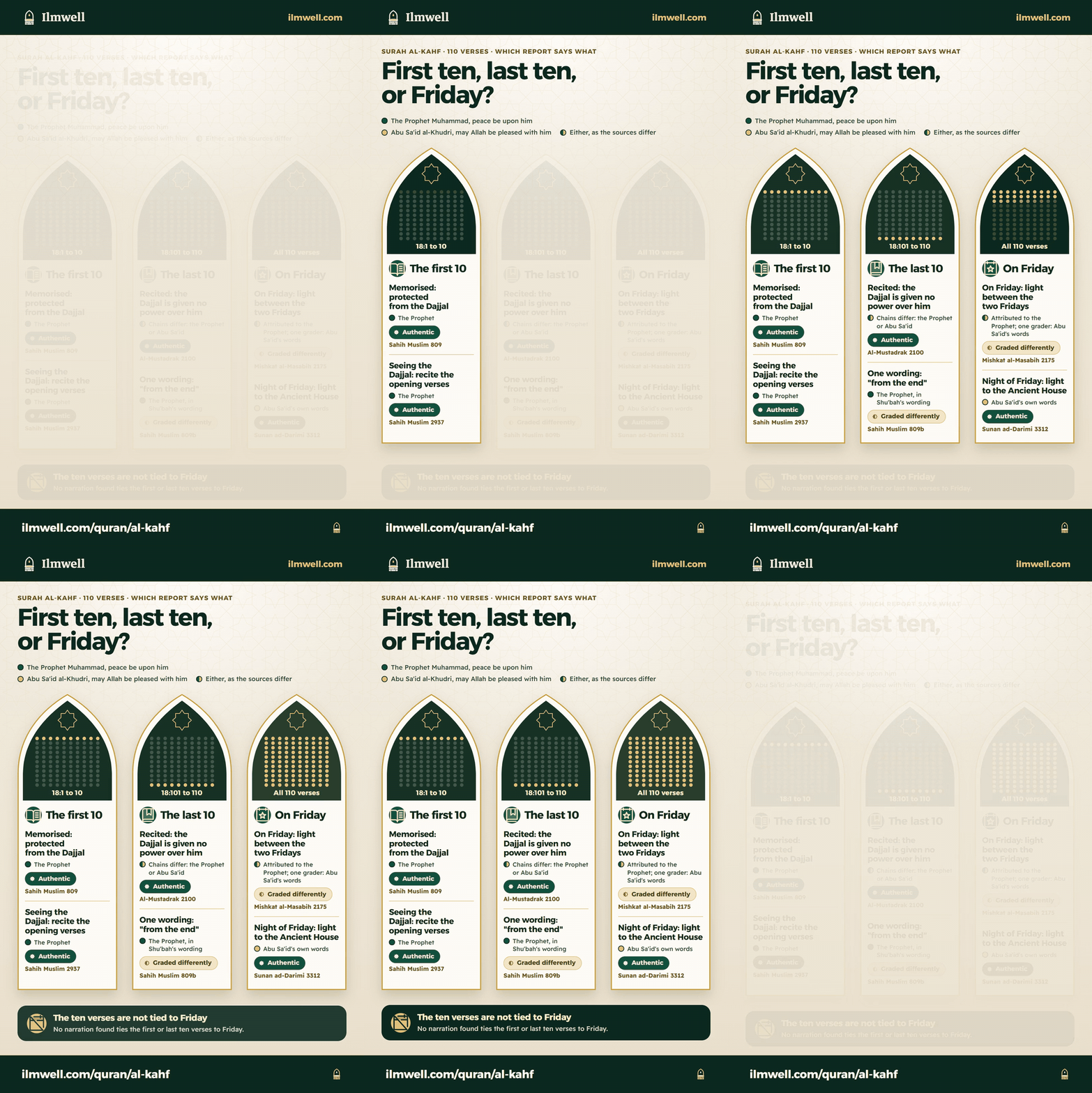
What are the benefits of Surah Kahf?
Al-Bara' ibn 'Azib, may Allah be pleased with him, reported that a man was reciting Surat al-Kahf with his horse tied beside him by two ropes. A cloud covered him and kept coming nearer, and the horse began to shy. In the morning he told the Prophet, who said: that was the tranquillity (sakinah) which came down with the Quran. It names no reward and no day.
11AuthenticSahih al-Bukhari 5011
Two often-shared reports are weaker. The "eight days" report through 'Ali, may Allah be pleased with him, is graded very weak or weak. The "light from foot to head" report through Mu'adh ibn Anas, may Allah be pleased with him, is graded weak in its one grading on record.
12WeakAl-Silsila al-Da'ifa 2013
The reports people often quote, with whose words they are:
| What is said | Whose words | Source and grade |
|---|---|---|
| Whoever memorises ten verses from the beginning of Al-Kahf is protected from the Dajjal. | The Prophet, through Abu al-Darda' | Authentic Sahih Muslim 809 Source 2 |
| Whoever lives to see the Dajjal should recite over him the opening verses of Al-Kahf. | The Prophet, through al-Nawwas ibn Sam'an | Authentic Sahih Muslim 2937 Source 3 |
| "From the end of Al-Kahf" in place of "from the beginning". | The Prophet, through Abu al-Darda', in Shu'bah's wording | Graded differently Sahih Muslim 809b Source 5 |
| Ten verses from its end: the Dajjal is given no power over him; the surah is a light on the Day of Resurrection. | Abu Sa'id: the Prophet's words in some chains, his own in others | Authentic Al-Mustadrak 2100 Source 6 |
| Three verses from its beginning protect from the Dajjal's trial. | The Prophet, through Abu al-Darda' | Graded differently Jami' at-Tirmidhi 2886 Source 4 |
| Recited on Friday, light shines for him between the two Fridays. | Attributed to the Prophet through Abu Sa'id; one grader says his own words | Graded differently Mishkat al-Masabih 2175 Source 7 |
| Recited on the night of Friday, light shines between him and the Ancient House. | Abu Sa'id's own words | Authentic Sunan ad-Darimi 3312 Source 8 |
| Recited on Friday: a light from beneath his feet to the clouds, and forgiveness between the two Fridays. | Attributed to the Prophet through Ibn 'Umar | Graded differently Al-Targhib wa al-Tarhib 1/354 Source 9 |
| Recited on Friday: forgiven until the next Friday and three days more. | Attributed to the Prophet through 'A'isha | Weak Al-Silsila al-Da'ifa 2482 Source 10 |
| Recited on Friday: protected for eight days from every trial. | Attributed to the Prophet through 'Ali | Weak Al-Silsila al-Da'ifa 2013 Source 12 |
| Its beginning and end are a light from foot to head; all of it, a light from earth to sky. | Attributed to the Prophet through Mu'adh ibn Anas | Weak Musnad Ahmad 15626 Source 13 |
| A cloud of tranquillity came down while a man recited it. | The Prophet, through al-Bara' | Authentic Sahih al-Bukhari 5011 Source 11 |
| Escorted by 70,000 angels; recited on Friday, forgiven until the next Friday and three days more. | Attributed to the Prophet by Ishaq ibn 'Abdullah ibn Abi Farwa, a later narrator who names no companion | Weak Al-Tidhkar fi Afdal al-Adhkar 195 Source 14 |
| Recited on the night of Friday: a light reaching Makkah, forgiven until the next Friday and three days more. | No narrator named in the listing | Our search: one grading found, "fabricated" Source 15 |
Is there a Surah Kahf PDF?
We do not offer a PDF file or an image, but the full surah is here to read online, copy or print. The buttons print all 110 verses, the Arabic alone, or the first or last ten. Save as PDF in the print window keeps a copy.
The text is not colour-coded for tajweed (the rules of recitation). Listen and repeat. Audio by a fluent human reciter is coming. We do not use a synthetic voice for the Quran.
Questions people ask
Which para is Surah Kahf in?
Two: verses 1 to 74 are in juz (para) 15, and verses 75 to 110 in juz 16, by the Tanzil division.
Is there an Urdu translation of Surah Kahf here?
No. Ilmwell is in English, so this page gives the English translation with the Arabic and a transliteration.
Sources
Every claim on this page comes from one of these. Gradings are reported with the scholar's name; we do not grade hadith ourselves.
- 1
Ubayy ibn Ka'b reported the Prophet Muhammad, peace be upon him, account of Moses: asked who was the most learned, he said 'I'; Allah told him of a servant at the junction of the two seas more learned than him; Moses set out with his servant boy Yusha' ibn Nun and met al-Khidr.
Sahih al-Bukhari 122 Book 3, Hadith 64
Authentic: in Sahih al-Bukhari
- 2
Abu al-Darda' reported that the Prophet said: whoever memorises ten verses from the beginning of Surat al-Kahf is protected from the Dajjal.
Sahih Muslim 809 Book 6, Hadith 311
Authentic: in Sahih Muslim (Muslim); Sahih, in Sahih Muslim 809 as listed on dorar.net (Muslim); its chain is sahih (Al-Hakim); its chain is sahih on the conditions of Muslim (Shu'ayb al-Arna'ut); sahih (Al-Albani); its chain is sahih (Al-Albani); the other wording is anomalous; the preserved wording is this first one (Al-Albani); the first wording, 'from the beginning', is the preserved one (Shu'ayb al-Arna'ut); sahih (Al-'Ajluni); sahih (Ibn al-Qayyim)
- 3
In the long hadith of al-Nawwas ibn Sam'an about the Dajjal, the Prophet said that whoever of you lives to see him should recite over him the opening verses of Surat al-Kahf.
Sahih Muslim 2937 Book 54, Hadith 134
Authentic: in Sahih Muslim (Muslim); sahih (Al-Albani)
- 4
Abu al-Darda' reported that the Prophet said: whoever recites three verses from the beginning of al-Kahf is protected from the trial of the Dajjal; graded differently.
Jami' at-Tirmidhi 2886 Book 45, Hadith 12
Graded differently. Here is who graded it which way:
- SoundAl-Tirmidhi, Darussalam edition, Al-Suyuti
- WeakAl-Albani
See each grading in full, with its wording and where it was given
Scholars disagree about this hadith. Here is how each graded it, so you can follow the scholar you trust.
- حسن صحيح (hasan sahih): Al-Tirmidhi, Jami' at-Tirmidhi 2886
- Sahih (Darussalam, as shown on sunnah.com): Darussalam edition (as shown on sunnah.com)
- صحيح (sahih): Al-Suyuti, al-Jami' al-Saghir 8912 (as listed on dorar.net)
- صحيح بلفظ من حفظ عشر آيات وهو بلفظ الكتاب شاذ (sahih in the wording 'whoever memorises ten verses'; in this wording, three verses, anomalous): Al-Albani, Sahih al-Tirmidhi 2886 (as listed on dorar.net)
- صحيح بلفظ من حفظ عشر آيات (sahih only in the wording 'ten verses'; listed in his collection of weak reports): Al-Albani, Da'if al-Tirmidhi 2886 (as listed on dorar.net)
- شاذ بهذا اللفظ (anomalous in this wording; sahih with 'ten' in place of 'three'): Al-Albani, Hidayat al-Ruwat 2088 (as listed on dorar.net)
- شاذ (anomalous): Al-Albani, al-Silsila al-Da'ifa 1336 (as listed on dorar.net)
- شاذ (anomalous): Al-Albani, Da'if al-Targhib 883 (as listed on dorar.net)
- ضعيف (weak): Al-Albani, Da'if al-Jami' 5765 (as listed on dorar.net)
- 5
In one chain of the same hadith in Sahih Muslim, Shu'bah's wording says 'from the end of al-Kahf' in place of 'from the beginning'; graded differently.
Sahih Muslim 809b Book 6, Hadith 312
Graded differently. Here is who graded it which way:
- SoundIbn Hibban, Shu'ayb al-Arna'ut
- WeakAl-Albani, Shu'ayb al-Arna'ut
- Other remarksMuslim, Abu Dawud
See each grading in full, with its wording and where it was given
Scholars disagree about this hadith. Here is how each graded it, so you can follow the scholar you trust.
- Recorded in Sahih Muslim as a note on the chain of 809 (Shu'bah's difference), without Muslim endorsing it over the 'beginning' wording: Muslim, by inclusion in his Sahih
- أخرجه في صحيحه (included in his Sahih), wording: whoever recites ten verses from the end of al-Kahf: Ibn Hibban, Sahih Ibn Hibban 786 (as listed on dorar.net)
- إسناده صحيح (its chain is sahih): Shu'ayb al-Arna'ut, takhrij Sahih Ibn Hibban 786 (as listed on dorar.net)
- إسناده صحيح (its chain is sahih), wording: ten verses from the end of al-Kahf: Shu'ayb al-Arna'ut, takhrij al-Musnad 27516 (as listed on dorar.net)
- الرواية الأخرى شاذة والمحفوظ الرواية الأولى (the other wording, 'from the end', is anomalous; the preserved wording is the first): Al-Albani, takhrij Riyad al-Salihin 1028 (as listed on dorar.net)
- الرواية الأولى هي المحفوظة (the first wording, 'from the beginning', is the preserved one): Shu'ayb al-Arna'ut, takhrij Riyad al-Salihin 1021 (as listed on dorar.net)
- Note: Hisham al-Dastawa'i said 'from the closing verses of Surat al-Kahf' and Shu'bah said 'from the end of al-Kahf': Abu Dawud, a note after hadith 4323 of his Sunan (not a grading)
- 6
A report from Abu Sa'id al-Khudri says whoever recites Surat al-Kahf as it was revealed will have a light on the Day of Resurrection from where he stands to Makkah, and whoever recites ten verses from its end and then the Dajjal comes out, he will not be given power over him; some chains give it as the Prophet's words, others as Abu Sa'id's.
Al-Mustadrak 2100 al-Mustadrak 2100, as dorar.net cites it
Authentic: sahih on the conditions of Muslim (Al-Hakim); its chain is sahih (Al-Albani); its chain is sahih on the conditions of al-Bukhari and Muslim (Al-Albani); sahih through its other routes (Al-Albani); sahih (Al-Albani); sahih (Ibn al-Mulaqqin); its chain is sahih or hasan or close to them (Al-Mundhiri); a companion's words; its narrators are trustworthy and relied upon (Al-Shawkani). Remarks: silent on it, as Abu Sa'id's words through Qays ibn 'Ubad; his introduction says his narrators are trustworthy (Al-Hakim); its narrators are narrators of the Sahih (Al-Mundhiri); its men are men of the Sahih (Al-Haythami); it is also disputed whether it is the Prophet's words or a companion's (Mulla 'Ali al-Qari); only Yahya ibn Kathir narrated it from Shu'bah as the Prophet's words (Al-Tabarani)
- 7
A report from Abu Sa'id al-Khudri says the Prophet said that whoever recites Surah Al-Kahf on Friday, light shines for him between the two Fridays; graded differently.
Mishkat al-Masabih 2175 Book 8, Hadith 65
Graded differently. Here is who graded it which way:
- SoundAl-Albani, Ibn Hajar al-'Asqalani, Al-Hakim, Al-Suyuti, Muhammad ibn 'Abd al-Wahhab, Al-Buhuti
- WeakAl-Dhahabi
- Other remarksAl-Dhahabi, Ibn 'Uthaymin, Ibn Kathir, Al-Mundhiri
See each grading in full, with its wording and where it was given
Scholars disagree about this hadith. Here is how each graded it, so you can follow the scholar you trust.
- حسن (Hasan): Al-Albani (as shown on sunnah.com, Mishkat al-Masabih 2175)
- صحيح (sahih): Al-Albani, Sahih al-Jami' 6470 (as listed on dorar.net)
- صحيح (sahih): Al-Albani, Sahih al-Targhib 736 (as listed on dorar.net)
- صحيح (sahih): Al-Albani, Irwa' al-Ghalil 626 (as listed on dorar.net)
- حسن (hasan): Al-Albani, Hidayat al-Ruwat 2116 (as listed on dorar.net)
- حسن (hasan): Ibn Hajar al-'Asqalani, as cited in Fayd al-Qadir 6/198 (as listed on dorar.net)
- صحيح الإسناد (its chain is sahih): Al-Hakim, al-Mustadrak 3436 (as listed on dorar.net)
- صحيح (sahih): Al-Suyuti, al-Jami' al-Saghir 8910 (as listed on dorar.net)
- إسناده حسن (its chain is hasan): Muhammad ibn 'Abd al-Wahhab, al-Hadith 2/166 (as listed on dorar.net)
- إسناده حسن (its chain is hasan): Al-Buhuti, Kashshaf al-Qina' 2/43 (as listed on dorar.net)
- وقفه أصح (that it stops at the companion is more correct): Al-Dhahabi, al-Muhadhdhab fi Ikhtisar al-Sunan 3/1181 (as listed on dorar.net)
- [فيه] نعيم [بن حماد] ذو مناكير (it has Nu'aym ibn Hammad, who narrates denounced reports): Al-Dhahabi, Talkhis al-Mustadrak 3430 (as listed on dorar.net)
- [فيه] نعيم بن هشام ذو مناكير (it has Nu'aym, who narrates denounced reports): Al-Dhahabi, as cited in Fayd al-Qadir 6/198 (as listed on dorar.net)
- أعل بعض العلماء المرفوع بأن الحديث روي موقوفا (some scholars faulted the Prophet's wording because it was also narrated as a companion's words): Ibn 'Uthaymin, al-Sharh al-Mumti' 5/91 (as listed on dorar.net)
- مرفوع، وروي موقوفاً (narrated as the Prophet's words, and also as a companion's words): Ibn Kathir, Irshad al-Faqih 1/199 (as listed on dorar.net)
- [فيه] أبو هاشم يحيى بن دينار الرماني والأكثرون على توثيقه وبقية الإسناد ثقات (it has Abu Hashim Yahya ibn Dinar al-Rummani, whom most consider reliable; the rest of the chain is reliable): Al-Mundhiri, al-Targhib wa al-Tarhib 1/353 (as listed on dorar.net)
- 8
Abu Sa'id al-Khudri said, in his own words: whoever recites Surat al-Kahf on the night of Friday, light shines for him between him and the Ancient House (the Ka'bah).
Sunan ad-Darimi 3312 Book 23, Hadith 3312 (Arabic reference)
Authentic: its chain is sahih; all its narrators are trustworthy narrators of al-Bukhari and Muslim (Al-Albani); a companion's words; its narrators are trustworthy (Al-Shawkani); sahih or hasan, by the condition he set in his introduction (Ibn al-Mulaqqin). Remarks: as the words of Abu Sa'id al-Khudri (Mulla 'Ali al-Qari); a companion's words; it has Abu Hashim, whom most consider reliable, and the rest of the chain is reliable (Al-Ruba'i); هذا هو المحفوظ موقوفاً (this is the preserved form, as a companion's words), on the wording 'on the day of Friday ... the Ancient House' (Al-Bayhaqi); in all its routes, the narrators of the companion's wording are more precise than those of the Prophet's wording (Ibn Hajar al-Asqalani)
- 9
A report attributed to the Prophet through Ibn 'Umar says whoever recites Surat al-Kahf on Friday, a light rises for him from beneath his feet to the clouds of the sky, shining for him on the Day of Resurrection, and he is forgiven what is between the two Fridays; graded differently.
Al-Targhib wa al-Tarhib 1/354 al-Mundhiri, al-Targhib wa al-Tarhib 1/354, as dorar.net cites it
Graded differently. Here is who graded it which way:
- SoundAl-Mundhiri, Al-Suyuti, Al-Ruba'i
- WeakIbn Kathir, Al-Albani, Ibn al-Qayyim
- Other remarksIbn Kathir, Ibn al-Mulaqqin, Ibn Hajar al-Asqalani
See each grading in full, with its wording and where it was given
Scholars disagree about this hadith. Here is how each graded it, so you can follow the scholar you trust.
- إسناده لا بأس به (there is no harm in its chain): Al-Mundhiri, al-Targhib wa al-Tarhib 1/354 (as listed on dorar.net)
- إسناده لا بأس به (there is no harm in its chain): Al-Suyuti, al-Budur al-Safira 249 (as listed on dorar.net)
- إسناده لا بأس به (there is no harm in its chain): Al-Ruba'i, Fath al-Ghaffar 2/637 (as listed on dorar.net)
- إسناده غريب وفي رفعه نظر، وأحسن أحواله الوقف (its chain is unusual, its attribution to the Prophet is doubtful, and at best it is a companion's words): Ibn Kathir, Tafsir al-Qur'an al-'Azim 5/131 (as listed on dorar.net)
- ضعيف (weak): Al-Albani, Da'if al-Targhib 447 (as listed on dorar.net)
- منكر (munkar: denounced): Al-Albani, Tamam al-Minna 324 (as listed on dorar.net)
- إسناده غريب (its chain is unusual): Ibn Kathir, Irshad al-Faqih 1/200 (as listed on dorar.net)
- في سنده من لا أعرف (its chain has a narrator I do not know): Ibn al-Mulaqqin, Tuhfat al-Muhtaj 1/523 (as listed on dorar.net)
- فيه محمد بن خالد تكلم فيه ابن منده وغيره (it has Muhammad ibn Khalid, criticised by Ibn Mandah and others): Ibn Hajar al-Asqalani, as cited in Fayd al-Qadir 6/199 (as listed on dorar.net)
- ذكره سعيد بن منصور من قول أبي سعيد الخدري وهو أشبه (Sa'id ibn Mansur gives it as the words of Abu Sa'id al-Khudri, which is more likely): Ibn al-Qayyim, Zad al-Ma'ad 1/366 (read on shamela.ws, al-Risala edition)
- 10
A report attributed to the Prophet through 'A'isha names Surat al-Kahf as a surah whose greatness fills what is between the heavens and the earth: whoever recites it on Friday is forgiven what is between it and the next Friday and three days more; graded very weak or weak.
Al-Silsila al-Da'ifa 2482 al-Albani, al-Silsila al-Da'ifa 2482, as dorar.net lists it
Weak: very weak (Al-Albani); its chain is weak (Ibn 'Iraq al-Kinani); weak (Ibn Baz); reported by routes, some with two links missing, mu'dal, some without a companion, mursal (Ibn Hajar al-Asqalani). Remarks: reported by other routes, but some are mu'dal and some mursal (Al-Munawi)
- 11
Al-Bara' reported that a man was reciting Surat al-Kahf with his horse tied beside him; a cloud covered him and came nearer, and his horse began to shy; the Prophet said: that was the tranquillity (al-sakinah) which came down with the Quran.
Sahih al-Bukhari 5011 Book 66, Hadith 33
Authentic: in Sahih al-Bukhari
- 12
A report attributed to the Prophet through 'Ali says whoever recites Surat al-Kahf on Friday is protected for eight days from every trial, and if the Dajjal comes out he is protected from him; graded very weak or weak.
Al-Silsila al-Da'ifa 2013 al-Albani, al-Silsila al-Da'ifa 2013, as dorar.net lists it
Weak: very weak (Al-Albani); it has no chain, or a chain of a kind the critics do not rely on (Ibn 'Abd al-Hadi). Remarks: the sound report on this subject is 'whoever memorises ten verses from the beginning of Surat al-Kahf' ('Abd al-Haqq al-Ishbili); it has Abdullah ibn Mus'ab, whom Ibn Ma'in called weak (Shu'ayb al-Arna'ut); included in his selection; under the next entry, 430, he himself flags its narrator 'Abdullah ibn Mus'ab as unknown to al-Bukhari and Ibn Abi Hatim (Al-Diya' al-Maqdisi); it has Abdullah ibn Mus'ab, whom al-Bukhari and Ibn Abi Hatim do not mention (Al-Diya' al-Maqdisi)
- 13
A report attributed to the Prophet through Mu'adh ibn Anas says whoever recites the beginning and end of Surat al-Kahf, it is a light for him from his foot to his head, and whoever recites all of it, a light between the earth and the sky; graded weak.
Musnad Ahmad 15626 Musnad Ahmad 15626 (al-Arna'ut's numbering), as dorar.net cites it
Weak: a weak chain (Shu'ayb al-Arna'ut). Remarks: it has Ibn Lahi'ah, weak, and his teacher Zabban, weak and not relied on (Shu'ayb al-Arna'ut); Ahmad's chain has Ibn Lahi'ah, who is weak, though his reports are sometimes graded hasan (Al-Haythami); its routes have Ibn Lahi'ah and Rishdin ibn Sa'd, both from Zabban ibn Fa'id, and they are among the weak narrators (Ibn Hajar al-Asqalani)
- 14
A report attributed to the Prophet by Ishaq ibn 'Abdullah ibn Abi Farwa, with no companion named, calls Surat Ashab al-Kahf a surah escorted by 70,000 angels: whoever recites it on Friday is forgiven to the next Friday and three days more, given a light reaching the sky and kept from the Dajjal's trial; graded not authentic in the one grading found.
Al-Tidhkar fi Afdal al-Adhkar 195 al-Qurtubi, al-Tidhkar fi Afdal al-Adhkar 195, as dorar.net lists it
Weak: not authentic (Al-Qurtubi)
- 15
Our search of sunnah.com and the dorar.net encyclopedia, 22 October 2026, for reports about Surah Al-Kahf: the Dajjal wordings, the Friday wordings and the claims in the table. Found: the reports listed on this page with the gradings shown; no narration tying the first or last ten verses to Friday; a Friday-night light to Makkah with forgiveness and three days more (al-Shawkani, al-Fawa'id al-Majmu'a 311: fabricated); and Ibn Baz's answers that the Friday reports are weak one by one but strengthen each other, with Abu Sa'id's own report established.
sunnah.com and dorar.net Record: search-kahf-virtues, with every search term and result.
- Q
Quran Arabic for Al-Kahf 18:1 to 110 (the scrolls and the verse list), without the Bismillah the Tanzil copy prints at the head of verse 1, and its English. Surah number, verse count, Makkan listing, juz and page divisions from the Tanzil metadata; the word count from the Tanzil text.
Tanzil Project Uthmani text and metadata, CC BY 3.0. English: adapted from Marmaduke Pickthall's translation (1930), modernised and checked against modern translations.
Next
- Jumma Mubarak: meaning and why Friday is specialPhrase lesson
- Mashallah: meaning and when to say itPhrase lesson
- Inshallah: meaning and when to say itPhrase lesson
- Al-Mulk: themes, meaning and reported virtuesQuran lesson
- Yasin: themes and the narrations about its virtuesQuran lesson
- Surah Al-Baqarah: meaning, themes and learningQuran lesson
- Ayat al-Kursi: meaning and reported virtuesQuran lesson
- Surah Waqiah: meaning and the claims about its benefitsQuran lesson
- Surah Ar-Rahman: themes and meaningQuran lesson
- Quran and SurahsThe hub
For your own situation, ask a scholar you trust.
Join the email list
New guides by email, now and then. No spam, and you can leave at any time.
Ilmwell is free and kept going by readers. See how to support it.